
Table of Contents
Skardu Travel Guide 2026: Everything You Need to Know Before You Go
Skardu is the mountain capital of Gilgit-Baltistan, sitting where the Indus and Shigar rivers meet at roughly 2,500 metres above sea level, surrounded by the Karakoram Range and within striking distance of K2. The best time to go is late spring through autumn (April to October), and you can reach it either by a 40-minute PIA flight from Islamabad or a 14 to 21-hour road trip along the Karakoram Highway. This guide covers exactly how to plan that trip, day by day, without the guesswork.
Skardu isn’t just a stopover on the way to K2 base camp anymore. It has become a destination in its own right, with turquoise lakes, a cold desert, centuries-old forts, and valleys that most tourists never make it to. This guide is built around what actually matters when you’re planning: getting there, knowing where to go once you land, and not blowing your budget or your timeline.
Where Is Skardu and Why Does It Matter Geographically?
Skardu is the capital of Skardu District and the Baltistan Division, part of Pakistan-administered Gilgit-Baltistan in the wider Kashmir region. It sits at the confluence of the Indus and Shigar rivers, hemmed in by the Karakoram Range to the north and the Ladakh Range across the Indus to the south. This position is exactly why it works as a base: Skardu is the launch point for K2, the Gasherbrums, Broad Peak, and the Baltoro and Biafo glaciers, while the town itself stays at a manageable, livable altitude.

The region has deep Tibetan roots. Baltistan was part of the Tibetan Empire’s cultural sphere from the 7th century, and Balti, an ancient form of Tibetan, is still the first language of most locals, alongside Urdu and English. That heritage shows up everywhere, from the Manthal Buddha Rock to the architecture of Skardu Fort, which was modeled loosely on Tibet’s Potala Palace.
Skardu Weather & Best Time to Visit
April to June (Spring): Cherry and apricot blossoms cover Shigar and the orchards around Skardu town. Days are mild, nights are still cold, and Deosai is usually snowbound until late May.
July to September (Summer): The main tourist season. Deosai Plains fully opens, roads are clear, and daytime temperatures hover between 20°C and 31°C in Skardu town, though nights stay cool. This is also when Babusar Top is passable, shortening the road trip from Islamabad.
October (Autumn): Arguably the most photogenic window. Poplar and willow trees along the Indus and in Shigar Valley turn gold, crowds thin out, and hotel prices drop. Nights get cold fast, so pack layers.
November to March (Winter): Babusar Pass closes, so road access depends entirely on the Besham-KKH route. Deosai is inaccessible, snowfall is common in town, and temperatures can drop below -10°C. Flights become the only reliable option, and even those are frequently delayed by weather. Winter Skardu is stunning but strictly for travelers who don’t mind uncertainty.
If someone asks which single month is best, September is usually the answer: clear weather, open roads, cooling nights, and none of the July-August crowd surge.
How to Reach Skardu

There are exactly two ways in: fly, or drive. Each has real tradeoffs, and most seasoned travelers plan for both, because flights get cancelled often enough that you need a backup.
By Air
PIA, Airblue, and AirSial operate direct flights between Islamabad and Skardu, while seasonal direct services from Lahore and Karachi may vary depending on demand and airline schedules. Most flights are operated using Airbus A320 family aircraft, although aircraft types can change based on operational requirements.
The Islamabad-Skardu flight takes under an hour and, on a clear day, gives you a window-seat view of Nanga Parbat that alone justifies the ticket price. The airport was upgraded and designated international in December 2021, and it now accommodates limited international operations alongside domestic routes.
The catch: Skardu flights are notoriously weather-dependent. Morning flights have the best success rate because winds pick up later in the day. Book with flexibility in mind, and never schedule an international connection for the same day you fly out of Skardu.
By Road
Route 1 — Via Babusar Top (Summer only, roughly June to October): Islamabad to Naran, then over Babusar Pass to Chilas and onto the Karakoram Highway toward Jaglot and Skardu. This route is shorter, around 14 to 16 hours of driving, and considerably more scenic. It closes completely once snow hits the pass.
↗️ View Route 1 on Google Maps — Use this live navigation map to track real-time traffic updates and stopovers along the Naran-Babusar highway.
Route 2 — Via Besham/Dasu (Year-round): Islamabad to Abbottabad, then along the KKH through Besham, Dasu, and Chilas. This is the fallback when Babusar is closed, but it takes 18 to 21 hours and regularly runs into delays at the Dasu Dam construction zone, where traffic bottlenecks are common.
↗️ View Route 2 on Google Maps — Access the official Karakoram Highway navigation route to monitor construction delays near the Dasu Dam area.

| Route | Season | Duration | Road Quality |
|---|---|---|---|
| Naran-Babusar Top | June-October | ~14-16 hrs | Scenic, smooth asphalt |
| Besham-KKH (Dasu) | Year-round | ~18-21 hrs | Longer, construction delays near Dasu |
If your flight gets cancelled: Airlines and travel operators typically arrange a coaster bus or you can hire a private driver from Islamabad, heading out via the Hazara Expressway onto the KKH. Build in a spare day at the start of your itinerary specifically to absorb this risk.
Do You Need a 4×4?
Not for the main road. The Jaglot-Skardu Road is fully paved, and a standard sedan can comfortably reach Skardu city, Shigar, and even Khaplu Palace. A 4×4 Jeep or Prado only becomes mandatory for Deosai Plains, Basho Valley, and Soq Valley, where the tracks turn to rough, unpaved rock. If your itinerary includes any of those three, budget for a jeep rental with a local driver rather than assuming your rental sedan will manage it.
Getting Around: Skardu’s Four Tourist Zones
Skardu’s attractions cluster into four directions from the city center. Trying to cover opposite zones in one day is the single most common planning mistake, since the road quality and driving time vary a lot between them.
| Zone | Key Attractions | Distance | Vehicle Needed |
|---|---|---|---|
| Kachura (West) | Shangrila Resort, Upper Kachura Lake, Soq Valley | ~30 km, paved (jeep for Soq) | Sedan / any car |
| Shigar (North) | Sarfaranga Cold Desert, Shigar Fort | ~35 km, paved highway | Sedan / any car |
| Khaplu (East) | Mantoka Waterfall, Khaplu Palace | ~100 km, long but smooth | Sedan / any car |
| Deosai (South) | Satpara Lake, Deosai Plains | ~40 km to top, rough and unpaved | Strictly 4×4 |
Closer to town, several sites are near enough to combine with a half-day around the city itself:
| Destination | Distance from Skardu | Travel Time |
|---|---|---|
| Kharpocho Fort | 4 km | ~20 min |
| Manthal Buddha Rock | 8 km | ~30 min |
| Katpana Cold Desert | 10 km | ~20 min |
| Satpara Lake | 18 km | ~32 min |
| Kachura Lakes | 23 km | ~40 min |
| Deosai National Park (entrance) | 41 km | ~1.5 hrs |
The Ultimate Skardu Itinerary: 5 to 7 Days
5 to 7 days by air is the sweet spot for most families and first-timers. Add two to three days if you’re driving from Lahore or Karachi.

Day 1 — Arrival & Katpana Cold Desert: Fly or drive in, settle into your hotel, and spend the afternoon at Katpana, one of the world’s highest cold deserts, where sand dunes sit against a backdrop of snow-capped peaks. Go in the late afternoon rather than midday; the light is softer for photos and the sand isn’t scorching underfoot. It’s a short, flat walk from the parking area, which makes it manageable for elderly travelers and young kids alike — a good low-effort way to ease into the altitude after a flight.

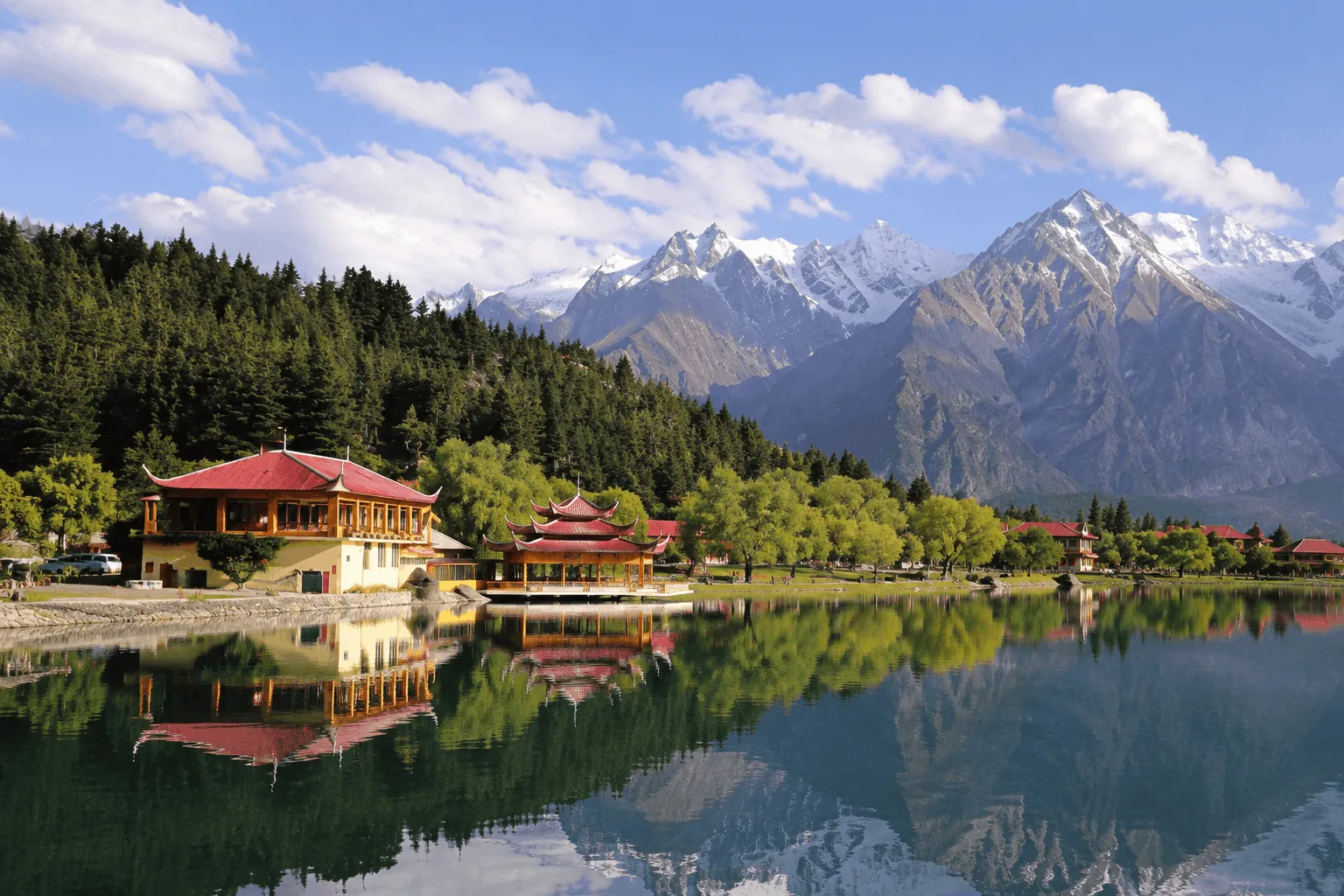
Day 2 — Shangrila Resort, Upper Kachura & Soq Valley: Visit Shangrila (Lower Kachura) Lake, famous for the resort restaurant built inside a crashed aircraft fuselage, then boat on the deeper, quieter Upper Kachura Lake. Upper Kachura sees far fewer visitors than Shangrila since it isn’t attached to a resort, and its water is noticeably darker and colder — worth the extra 15-minute drive if you want a lake to yourself for an hour rather than a crowded photo spot. If you have a jeep, push on to Soq Valley for wildflower meadows and glacial streams; this is the kind of stop that suits travelers who’d rather sit by a stream in silence than tick off another viewpoint, and it’s largely skipped by day-tour groups working on a tight schedule.

Day 3 — Basho Valley: A full day dedicated to Basho’s alpine meadows and streams. This is a jeep-only route and one of the least crowded valleys near Skardu, worth the effort specifically because most itineraries leave it out. The track is bumpy enough that travelers prone to motion sickness should sit up front, and the payoff is a genuinely quiet meadow camp setting rather than a roadside viewpoint — better suited to trekkers and campers than anyone wanting a quick photo stop.

Day 4 — Deosai Plains & Satpara Lake: Head south by 4×4 to Satpara Lake first, then continue up to Deosai National Park, one of the highest plateaus in the world and home to the Himalayan brown bear during summer months. This is a long day; leave by early morning, both to beat the afternoon winds that pick up across the open plateau and to have the best odds of spotting wildlife, which tends to be more active earlier in the day. The altitude here (over 4,000 metres) can affect anyone unaccustomed to it, so pace the walking sections and keep water on hand; it’s not a place for travelers with heart or breathing conditions to push hard.

Day 5 — Shigar Fort & Marsur Rock: Drive north to Shigar Valley. Visit the restored Shigar Fort, now partly a heritage hotel, where the wooden balconies and irrigation channels still function the way they were designed centuries ago rather than sitting as static museum pieces. If you’re up for a short hike, Marsur Rock offers panoramic valley views for a moderate climb — doable for reasonably fit travelers but not a casual stroll, so factor in an hour or two of daylight buffer.

Days 6-7 (optional extension): Khaplu Palace and Mantoka Waterfall on the eastern side. Khaplu feels distinctly different from Skardu’s western zone — quieter, more agricultural, and less geared toward tourism, which is part of its appeal for travelers who’ve already seen the busier spots and want a slower final day. Alternatively, keep this as a buffer day built in specifically to absorb a flight delay on departure.
What Does a Skardu Trip Cost?
Costs vary heavily by season, vehicle choice, and whether you fly or drive. The figures below are approximate ranges based on typical 2026 pricing and should be treated as planning estimates, not fixed quotes — expect the higher end during July-August peak season and around major holidays.
| Expense | Approximate Range (PKR) | Approximate Range (USD) |
|---|---|---|
| Domestic flight, Islamabad-Skardu (one way) | 15,000 – 35,000 | 55 – 125 |
| Budget guesthouse (per night) | 3,000 – 6,000 | 10 – 20 |
| Mid-range hotel (per night) | 8,000 – 18,000 | 30 – 65 |
| Luxury resort, e.g. Shangrila / Avari Xpress (per night) | 25,000 – 60,000+ | 90 – 215+ |
| 4×4 jeep with driver (per day, for Deosai/Basho/Soq) | 8,000 – 15,000 | 30 – 55 |
| Private sedan with driver (per day, paved zones) | 6,000 – 10,000 | 20 – 35 |
| Meal, mid-range restaurant | 800 – 2,000 | 3 – 7 |
| Trout fish dish (local specialty) | 1,500 – 2,500 | 5 – 9 |
| Local transport within Skardu city (short ride) | 200 – 500 | 1 – 2 |
| Deosai National Park entry, local tourist | ~500 | ~2 |
| Deosai National Park entry, foreign national | — | ~40 |
These numbers move with fuel prices and currency fluctuations, so treat them as a baseline rather than a promise. Jeep and driver rates in particular are negotiable and tend to be higher if booked last-minute during peak season rather than arranged a few days ahead through a local operator.
For international travelers, a realistic 7-day Skardu trip — flights, mid-range hotel, jeep days for Deosai and Basho, meals, and a driver for the paved zones — typically lands somewhere in the 400 to 700 USD per person range for land costs alone, excluding international airfare into Pakistan. That’s moderate by comparable mountain-destination standards, largely because domestic transport and food remain cheap relative to accommodation and jeep hire.
Where to Stay

Skardu’s accommodation splits into three tiers. Budget guesthouses cluster in Skardu city itself and are fine for travelers prioritizing location over comfort. Mid-range hotels are scattered across the city and the Kachura road, and this tier generally offers the best value — clean rooms, hot water, and proximity to the main attractions without resort pricing. Luxury options are concentrated around Shangrila Lake and include the Shangrila Resort’s lakeside cabins and glamping setups that have grown popular over the past few seasons. Shigar Fort itself has been converted into a heritage hotel, which is worth considering if you want to sleep inside a piece of Baltistan’s history rather than just visit it, though rooms are limited and book out early in peak months.
Book well ahead for July through September; rooms near Shangrila and Kachura fill up fast during peak season, and last-minute bookings often mean settling for whatever’s left in town rather than near the lakes.
Culture and Food: What Makes Baltistan Different
Balti culture carries a strong Tibetan imprint, visible in architecture, dialect, and cuisine. Daily life in Skardu still moves around the rhythms of farming and the tourist season — apricot and cherry harvests in early summer, wheat and barley through the warmer months, and a noticeably quieter pace once the snow arrives and the roads to the outer valleys close. Hospitality here tends to be direct rather than performative: it’s common for a shopkeeper or a driver to invite you for tea simply because you asked a question, not because a tour itinerary called for it.
Traditional dishes worth seeking out include mamtu (steamed dumplings similar to momos), balay (a hearty noodle soup), butter tea, and apricot-based dishes made from the region’s abundant orchards. Fresh trout, pulled straight from Satpara and the Indus tributaries, shows up on most tourist-facing menus and is worth ordering at least once. The bazaars in central Skardu are busiest in the late afternoon and early evening, when locals do their own shopping alongside tourists picking up dried fruit and woollens — a better time to browse than the quieter mid-morning hours if you want a sense of everyday market life rather than just a tourist stall setup.
Religiously, the majority of Baltistan is Shia Muslim, with a Sunni minority and a small Noorbakshia Sufi presence, a legacy of the missionary work that brought Islam to the region in the 14th to 17th centuries. This shapes local customs more than most visitors expect — modest dress is appreciated well beyond religious sites, and during Muharram, expect some restaurants and shops to close or shorten hours as processions take place in town. Ask before photographing people or religious sites, and don’t assume a friendly conversation is an invitation to photograph someone’s home or family.
Handwoven woollens and Balti jewellery, sold in Skardu’s bazaars, are the most commonly recommended souvenirs, along with locally dried apricots and apricot oil. Bargaining is normal but expected to be good-natured rather than aggressive; a fair price is usually reached within one or two counter-offers.
Practical Survival Guide
Mobile network: SCOM is the most reliable network for calls and internet in Skardu, particularly outside the main city. Zong and Telenor work fine in town but lose signal quickly in valleys like Basho, Soq, or Deosai.
ATMs and cash: ATMs exist in Skardu city but are limited. Carry enough cash for remote valleys like Basho, Tormik, Bilamik, and Chunda, where card payments and even reliable ATM access aren’t guaranteed.
Packing: Layers are non-negotiable even in July, since nights drop sharply from daytime highs. A windproof jacket, sturdy walking shoes for uneven jeep tracks, sun protection for high-altitude glare, and a basic first-aid kit cover most situations. In shoulder seasons (April-May, October), add thermal layers.
Electricity: Load-shedding happens outside the main hotels; a power bank is worth packing if you’re heading into Basho or Soq for the day.
Night driving: Avoid it. Mountain roads have no street lighting, landslides are unpredictable, and heavy trucks dominate the highways after dark. If you’re on a multi-day road trip, break the journey with an overnight stop at Naran in summer or Chilas/Besham in winter rather than pushing through.
Photography: Early morning light on the Kachura lakes and late afternoon light at Katpana consistently produce better results than midday, when the glare off the water and sand tends to flatten photos.
Common Mistakes First-Time Visitors Make
Trying to cover the Deosai and Khaplu zones in the same day is the most frequent scheduling error; the driving alone eats most of a day in each direction. Underestimating night-time cold in summer is another, since a 30°C afternoon in Skardu city can drop to single digits after dark. Skipping travel insurance is a mistake too, given how often flights get delayed or cancelled by weather, and how remote medical care becomes once you’re past Skardu city. Finally, booking a sedan for a Deosai trip because “the main road looked fine” is a recurring and avoidable problem — the main road being paved says nothing about the Deosai track itself.
FAQ
What is Skardu famous for?
Skardu is best known as the gateway to K2 and the Karakoram’s 8,000-metre peaks, along with Shangrila Lake, the Katpana Cold Desert, and its Tibetan-influenced Balti culture.
How many days are enough for a Skardu tour?
Five to seven days work well for travelers flying in. If you’re driving from Lahore or Karachi, plan for eight to ten days to account for the road trip both ways.
Which month is best for Skardu?
September offers the best balance: open roads, clear skies, thinning crowds, and Deosai Plains still fully accessible.
Can you see K2 from Skardu?
No. K2 isn’t visible from Skardu town — reaching a viewpoint requires a multi-day trek toward Concordia, deep in the Baltoro Glacier region.
Is Skardu safe for tourists, including families?
Yes, Skardu is generally considered safe and welcoming for tourists and families. The main risks are road conditions and weather-related flight delays rather than security concerns.
Can international tourists visit Skardu?
Yes. International tourists regularly visit Skardu, and the airport was designated international in 2021, though most incoming international flights still route through Islamabad.
What language is spoken in Skardu?
Balti, an ancient Tibetan dialect, is the native language. Urdu and English are both widely understood, especially in tourist areas.
Is Hunza better than Skardu, or the other way around?
They serve different purposes. Hunza has more developed tourist infrastructure and easier access; Skardu offers rawer landscapes, closer proximity to K2, and fewer crowds outside peak season. Many itineraries combine both.
Is Skardu in Kashmir or Ladakh?
Skardu is in Pakistan-administered Gilgit-Baltistan, part of the broader, disputed Kashmir region. It is not in Ladakh, which lies across the Line of Control under Indian administration.
What to buy in Skardu?
Dried apricots and apricot oil, handwoven woollens, and Balti jewellery from the city’s bazaars are the most popular souvenirs.
Is a 4×4 mandatory for a Skardu trip?
Only for specific routes — Deosai Plains, Basho Valley, and Soq Valley require a 4×4. The main roads to Skardu city, Shigar, and Khaplu are fully paved and manageable in a standard sedan.


This Post Has 3 Comments