
Table of Contents
Azad Kashmir: Best Places, Routes, Costs and Safety Tips
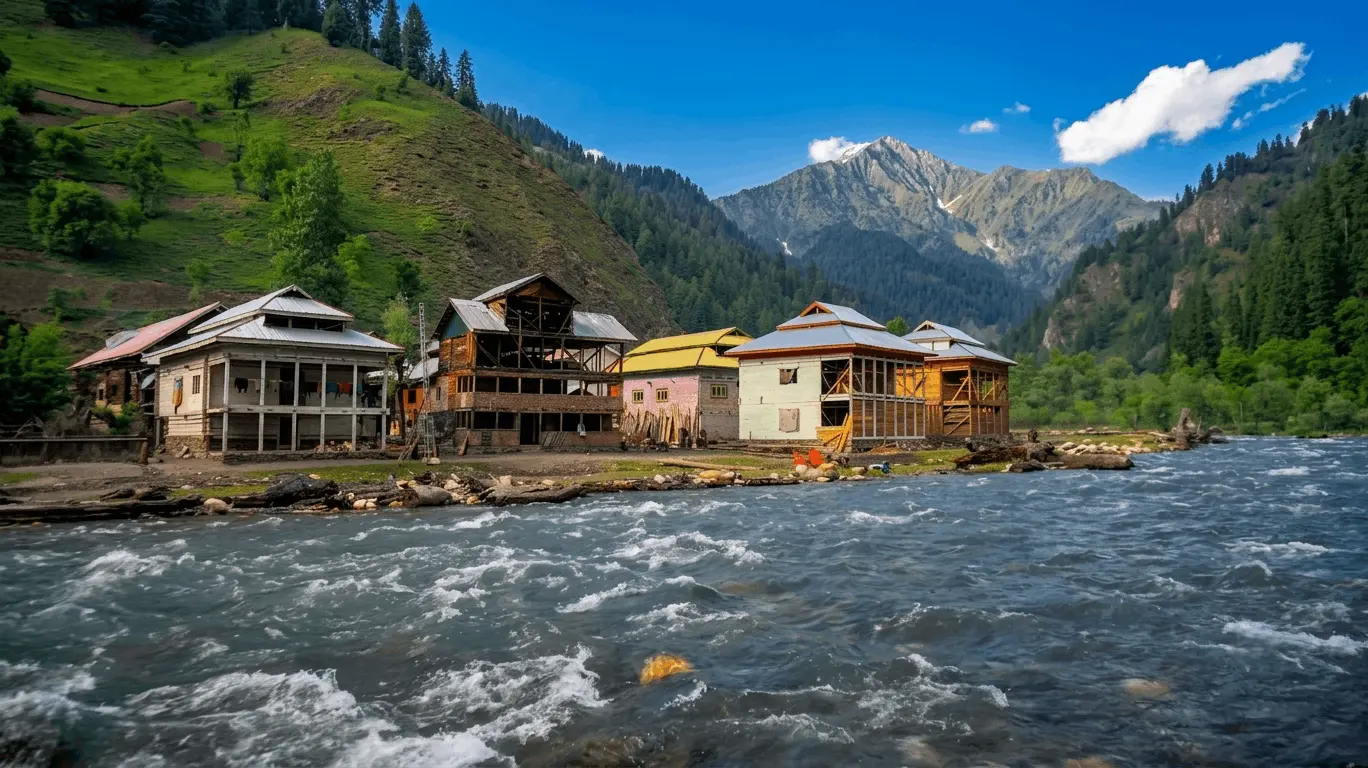
Azad Kashmir is the Pakistan-administered part of the disputed Kashmir region, and yes, it’s open and safe for domestic and foreign tourists in 2026, provided foreigners arrange the required NOC for certain border areas in advance. Its capital is Muzaffarabad, and the region is best known for Neelum Valley’s turquoise rivers, alpine lakes like Ratti Gali, and pine-covered mountain villages such as Arang Kel and Taobat.
If you’re trying to decide whether this trip is worth the long jeep rides and bumpy roads, the short answer is: yes, if you have at least four days and a tolerance for off-road travel. Here’s everything you need to plan it properly.
What Is Azad Kashmir? Quick Facts
Azad Jammu and Kashmir (AJK), commonly shortened to Azad Kashmir, is a self-governing territory administered by Pakistan. It sits west of the Line of Control that separates it from Indian-administered Jammu and Kashmir, bordered by Gilgit-Baltistan to the north and Punjab and Khyber Pakhtunkhwa to the south and west.
- Capital: Muzaffarabad
- Area: roughly 13,297 km² (5,134 sq mi)
- Population: over 4.3 million (2023 census)
- Administrative divisions: 3 (Mirpur, Muzaffarabad, Poonch), split into 10 districts
- Government: its own elected President, Prime Minister, Legislative Assembly, and High Court, though defense, currency, and foreign affairs remain with the federal government of Pakistan
- Official languages: Urdu and English, with Pahari, Hindko, Pothwari, Gojri, Kashmiri, and Pashto spoken across different districts
- Highest peak: Sarwali Peak in Neelum Valley, at 6,326 meters
The name itself means “Free Kashmir,” a title that dates back to a 1945 political pamphlet and was formalized after the 1947 Poonch rebellion against the Dogra maharaja’s rule. That history still shapes how the region is governed today: AJK has its own institutions, but the Kashmir dispute with India remains unresolved, and the territory is not represented in Pakistan’s national parliament.
Why Visit Azad Kashmir?
Few destinations in Pakistan offer the same combination of alpine lakes, riverside villages, historical landmarks, and mountain landscapes within a single trip. In just a few days, you can ride a chairlift to Arang Kel, trek to Ratti Gali Lake, watch the Neelum River flow beside the Line of Control, and spend a quiet evening beside Banjosa Lake or Pir Chinasi’s mist-covered viewpoints.
What makes Azad Kashmir different isn’t just its scenery. It’s the variety packed into a relatively small region: family-friendly lakes, honeymoon destinations, off-road jeep adventures, historical sites like Sharda, and some of northern Pakistan’s most photogenic valleys. Whether you’re planning a weekend escape or a week-long road trip, Azad Kashmir offers experiences that suit both first-time visitors and seasoned travelers.
Top 10 Places to Visit in Azad Kashmir

- Ratti Gali Lake (Best Alpine Lake)
- Arang Kel (Best for Couples & Scenic Views)
- Neelum Valley (Best Overall Destination)
- Taobat (Best Riverside Village Experience)
- Sharda (Best Historical & Cultural Attraction)
- Pir Chinasi (Best Mountain Viewpoint)
- Kutton Waterfall (Best Waterfall Experience)
- Leepa Valley (Best Offbeat Valley Escape)
- Banjosa Lake (Best Family-Friendly Destination)
- Ramkot Fort & Mangla Lake (Best Historical Lakeside Attraction)
Jump to full details in Best Places to Visit below.
A Short History of Azad Kashmir
The region traces its modern identity to 1947. When British India was partitioned, the princely state of Jammu and Kashmir sat between joining Pakistan, joining India, or remaining independent. A local uprising against the maharaja’s rule broke out in Poonch that autumn, and by October 1947 a provisional Azad Jammu and Kashmir government had formed, aligning with Pakistan. Fighting between Indian and Pakistani forces followed, stabilizing along what became the Line of Control. A 1949 ceasefire formalized the division, and Pakistan has administered this western portion, with its own president, prime minister, and assembly, ever since. The wider Kashmir dispute between India and Pakistan remains unresolved to this day.
India vs Pakistan-Administered Kashmir: What Travelers Should Know
Kashmir today is split by the Line of Control (LoC), a de facto border separating Pakistan-administered Azad Kashmir from Indian-administered Jammu and Kashmir. The two are governed, accessed, and visited entirely separately; you cannot cross between them as a tourist. This split is also why “Kashmir” online often returns confusing, mixed results, since news, weather, and travel content for both sides frequently appear together under the same name. For practical trip planning, this complexity doesn’t affect you: Azad Kashmir has its own entry rules, infrastructure, and tourist circuit, covered in detail throughout this guide.
Why Is Kashmir Called “Paradise on Earth”?
Kashmir has been called “Paradise on Earth” for centuries, a phrase widely attributed to the Mughal emperor Jahangir, who famously described the region with the Persian words, “Agar firdaus bar rū-ye zamīn ast, hamīn ast-o, hamīn ast-o, hamīn ast” (“If there is a paradise on earth, it is this, it is this, it is this”). He was referring to the wider Kashmir region, celebrated for its rivers, forests, lakes, and snow-covered mountains.
Although today’s political boundaries did not exist during Jahangir’s time, the phrase has naturally become associated with Kashmir as a whole, including Azad Kashmir. Places such as Neelum Valley, Arang Kel, Taobat, Pir Chinasi, and Ratti Gali Lake continue to embody the landscapes that earned Kashmir its legendary reputation.
For travelers, the title isn’t simply a tourism slogan. Azad Kashmir offers a rare combination of alpine lakes, pine forests, riverside villages, waterfalls, and high-altitude viewpoints packed within a relatively compact region. It’s one of the few destinations in Pakistan where you can experience history, adventure, wildlife, and mountain culture on the same journey, which is why many visitors still describe it as a modern-day “Paradise on Earth.”
Is Azad Kashmir Safe to Travel in 2026?
Azad Kashmir has rapidly emerged as one of Pakistan’s leading mountain tourism destinations. According to the Azad Kashmir Department of Tourism and Archaeology, the region welcomed more than 1.5 million tourists in 2025, with visitors exploring both its plains and mountainous areas throughout the year. Ongoing investments in tourism infrastructure, including improved road connectivity and visitor facilities, have made popular destinations increasingly accessible. That said, travel conditions can still vary considerably depending on the season, weather, and how close a destination lies to the Line of Control, making advance trip planning particularly important for remote areas of upper Neelum Valley.
The main safety consideration isn’t crime; it’s proximity to the Line of Control. Some upper Neelum Valley areas near Taobat, Keran, and Athmuqam sit close to the LoC, and while the region has generally been calm since the 2003 ceasefire understanding, tensions between India and Pakistan can flare periodically, as they did in May 2025. It’s worth checking current advisories before finalizing an itinerary, especially for the border-adjacent villages.
Domestic tourists need only a valid CNIC. Foreign nationals should obtain a No Objection Certificate (NOC) for travel to certain restricted zones near the LoC; this is arranged in advance and is a standard, well-established process rather than an obstacle.
Best Time to Visit Azad Kashmir

May through October is the reliable window, when snow has cleared from the mountain passes and jeep tracks to places like Ratti Gali and Arang Kel are passable.
| Month | High/Low (°C) | Conditions | Access |
|---|---|---|---|
| January | 4° / -5° | Snowfall | Partially closed |
| February | 8° / -2° | Snowy | Partially closed |
| March | 16° / 7° | Partially snowy | Open |
| April | 18° / 9° | Spring greenery | Open |
| May | 27° / 15° | Green, dry | Open |
| June | 30° / 21° | Sunny, green | Open |
| July | 34° / 23° | Monsoon rain | Open |
| August | 31° / 20° | Lush green | Open |
| September | 28° / 15° | Green, cooling | Open |
| October | 22° / 10° | Autumn color | Open |
| November | 15° / 5° | Cold | Partially closed |
| December | 7° / -5° | Snowy | Partially closed |
A few practical notes worth knowing before you pick dates:

For families, early summer (May – June) balances warm weather with clear roads and fewer crowds than July’s monsoon rush. For couples chasing snow scenes, Pir Chinasi and the upper valleys get their first flakes around late November, though full accessibility narrows fast after that. July and August bring the heaviest rainfall of the year, which is beautiful for waterfalls like Dhani and Kutton but can also trigger landslides on the Neelum road, so build slack days into your schedule if you’re traveling then.
How to Reach Azad Kashmir
Islamabad is the standard gateway. From there, Azad Kashmir begins roughly 180 km / 5 hours away by road, with Muzaffarabad as the first major stop. Public transport (vans and coasters) leaves Islamabad for Muzaffarabad roughly every 20 minutes, or you can hire a private car or join a guided multi-day tour.
Travel Tip: If you’re driving for the first time, it’s worth checking the live route and estimated travel time before departure. You can use Google Maps Directions to Muzaffarabad to plan your journey from Islamabad and monitor current road conditions.
Muzaffarabad has its own airport, but scheduled commercial flights are limited and road travel remains the practical option for most visitors. Once you’re past Muzaffarabad, deeper into Neelum Valley (past Sharda), you’ll need to switch to a 4×4 jeep; paved roads don’t extend much further, and the terrain gets genuinely rough.

Distance and Travel Time Reference
| Route | Distance | Travel Time |
|---|---|---|
| Islamabad to Azad Kashmir (Muzaffarabad) | 180 km | 5 hours |
| Islamabad to Neelum Valley | 220 km | 8 hours |
| Islamabad to Keran | 241 km | 9 hours |
| Islamabad to Sharda | 282 km | 12 hours |
| Islamabad to Arang Kel | 304 km | 14 – 15 hours |
| Lahore to Azad Kashmir | 650 km | 11 hours |
| Murree to Muzaffarabad | 70 km | 3 hours |
| Muzaffarabad to Kel | 175 km | 9.5 hours |
| Muzaffarabad to Taobat | 216 km | 12 hours |
| Sharda to Kel | 19 km | 1.5 hours |
| Kel to Arang Kel | 2 km trek | 30 minutes |
| Dowarian to Ratti Gali Lake | 24 km | 2 hours |
Note how travel time doesn’t scale evenly with distance; the last 40 – 60 km into upper Neelum Valley often take longer than the first 200 km, simply because the road narrows to a single-lane jeep track hugging the riverbank.
Detailed Travel Guide to Azad Kashmir’s Top Attractions
Neelum Valley Attractions

Dhani (Noseri) Waterfall: About two hours from Muzaffarabad, this is usually the first major stop heading into Neelum Valley, and a good stretch break before the road gets rougher.
Kutton Waterfall: Roughly 8 km off the main road near Kundal Shahi Bazar, before you reach Keran. Often cited as the largest waterfall in the region.
Sharda: A hill station about 136 km from Muzaffarabad at 1,981 meters, home to the ruins of the ancient Sharda Temple, once a major seat of learning in the old Kashmir region. Worth a half-day if you’re interested in history rather than just scenery.
Kel and Arang Kel: Kel sits at 2,097 meters and serves as the jumping-off point for Taobat, Shounter Valley, and Chitta Katha Lake. Arang Kel itself has no road access; you reach it either via a chairlift plus a 30 – 40 minute walk, or a full two-hour trek across the Neelum River. It’s consistently rated one of the most photogenic villages in the region.

Taobat: The last major tourist village in Neelum Valley, sitting where the Kishenganga River becomes the Neelum. About 40 km from Kel by jeep, roughly 3 hours on rough track.

Ratti Gali Lake: A high-altitude glacial lake reached via Dowarian, involving a 4×4 jeep ride followed by a 45 – 55 minute trek. This is the single most-searched attraction in Azad Kashmir, and for good reason; it’s genuinely one of the standout alpine lakes in Pakistan.
Shounter Valley and Chitta Katha Lake: More remote, less crowded alternatives to Ratti Gali, better suited to travelers who’ve already done the popular circuit and want quieter trekking.
Keran: A relaxed riverside village directly on the Neelum, popular for picnics and photography rather than trekking.
Leepa Valley: About 105 km from Muzaffarabad via Reshian, known for terraced orchards rather than dramatic peaks. It’s a good half-day detour if you want a slower, more pastoral pace than the main Neelum Valley route.
Beyond Neelum Valley
Pir Chinasi: A shrine and viewpoint about 30 km from Muzaffarabad at roughly 2,900 meters, popular for cool summers and misty views over the capital.

Tolipeer: About 30 km from Rawalakot, at 8,800 feet, offering panoramic views over the Bagh and Poonch rivers. A common choice for paragliding.

Ganga Choti: A trek near Bagh, more physically demanding, aimed at hikers rather than casual sightseers.
Banjosa Lake: Near Rawalakot, with boating and lakeside resorts; one of the more accessible, family-friendly stops.
Ramkot Fort and Mangla Lake: Near Mirpur, offering a different flavor of Azad Kashmir: historical fort ruins beside Pakistan’s largest reservoir, rather than mountain scenery.
How Many Days Do You Need for Azad Kashmir?
3 days (Muzaffarabad and lower Neelum Valley): Realistic if you’re short on time. Day 1: Islamabad to Muzaffarabad, visit Pir Chinasi. Day 2: Dhani Waterfall, Kutton Waterfall, Keran. Day 3: return via Murree or direct to Islamabad.
5 days (deeper into Neelum Valley): Adds Sharda, Kel, and Arang Kel, with one night in each general area. This is the most commonly booked package length and gives you the chairlift-and-trek experience at Arang Kel without rushing.
7 days (full circuit including Taobat and Ratti Gali): Covers Sharda, Kel, Arang Kel, Taobat, and a dedicated day trip to Ratti Gali Lake via Dowarian. This is the itinerary to choose if Ratti Gali is your priority; trying to squeeze it into a 3-day trip usually means skipping something else.
What Does a Trip to Azad Kashmir Cost?
Budget varies enormously by trip style, but here’s a realistic range for 2026:
| Trip Type | Duration | Estimated Cost | Includes |
|---|---|---|---|
| Backpacking / Self-Drive | 3 – 4 Days | PKR 15,000 – 25,000 per person | Transport, budget accommodation and meals (excluding jeep hire) |
| Standard Guided Tour | 3 – 5 Days | PKR 17,000 – 30,000+ per person | Transport, hotels, meals and local guide (varies by package) |
| Jeep Rental (Sharda–Kel–Taobat) | Same Day | PKR 8,000 – 9,000 per jeep | Required for upper Neelum Valley travel |
| Jeep Rental (Baboon Valley) | Same Day | PKR 12,000 – 14,000 per jeep | Round trip from Kutton |
| Comprehensive Trip | 7 Days | PKR 35,000 – 50,000+ per person | Better accommodation and a complete Azad Kashmir circuit |
Travel Tip: Hotel prices in Muzaffarabad, Sharda, and other popular tourist areas increase noticeably during the peak summer season (June – August). Booking accommodation in advance can help you secure better rates and avoid limited availability.
Where to Stay in Azad Kashmir
Accommodation ranges from basic guesthouses to mid-range hotels, with genuine luxury limited mostly to Muzaffarabad.
- Muzaffarabad: the widest range, from budget guesthouses to established mid-to-upper-range hotels; the practical base for the first and last night of most trips.
- Neelum Valley (Sharda, Kel, Kundal Shahi): mostly guesthouses and small hotels; book ahead in peak summer (June – August), as options are limited past Sharda.
- Arang Kel: a handful of basic wooden guesthouses; no luxury tier, but the setting compensates.
- Rawalakot/Banjosa Lake: resort-style lakeside stays, generally more family-oriented than Neelum Valley’s guesthouses.
- Leepa Valley: limited guesthouse options; most visitors treat it as a day trip rather than an overnight stay.
Card payments are rare outside major Muzaffarabad hotels, so budget cash for accommodation deeper in the valley.
What to Eat in Azad Kashmir
Food in Azad Kashmir leans toward hearty, mutton-and-rice mountain cooking rather than the elaborate wazwan spread associated with Indian-administered Kashmir, though some dishes overlap.
- Kashmiri chai (pink/noon chai): widely available, worth trying at least once
- Trout: freshly caught from the Neelum and Jagran streams, served grilled or fried in riverside restaurants
- Kashmiri pulao and mutton karahi: standard hearty fare in Muzaffarabad and Sharda
- Local walnuts and dried fruits: sold roadside, especially around Leepa Valley
- Expect simple, meat-forward menus in Neelum Valley’s smaller towns; more variety is available in Muzaffarabad.
Entry Requirements and Permits
Domestic travelers need only a valid CNIC; no special permit is required for the main tourist circuit. Foreign nationals should apply for an NOC ahead of travel to areas near the Line of Control, which covers most of upper Neelum Valley including Keran, Athmuqam, and Taobat. This is a standard bureaucratic step, not a barrier; travel agencies operating in the region routinely handle the paperwork for clients.
Practical Travel Tips
Mobile network: Coverage thins out significantly past Kel and Taobat. Jazz and Telenor generally have the widest reach in Neelum Valley, but don’t count on reliable data once you’re deep in the valley.
Cash matters more than cards: ATMs are limited to Muzaffarabad and a handful of larger towns like Rawalakot. Withdraw enough cash before heading into Neelum Valley or Leepa; card payments are rare outside major hotels.
Jeep rides are non-negotiable past a certain point: if your itinerary includes Kel, Arang Kel, Taobat, or Ratti Gali, budget both the money and the time for 4×4 transfers. Regular sedans simply cannot make these tracks.
Pack for temperature swings: Even in June, evenings at higher elevations like Arang Kel or Pir Chinasi drop noticeably. A light jacket earns its space in your bag even during peak summer.
Road conditions change with weather: Monsoon rain (July – August) occasionally triggers landslides on the Neelum road. If you’re traveling then, avoid packing your itinerary too tight, since a half-day delay isn’t unusual.
Culture, People, and Local Life

Most residents of Azad Kashmir trace their roots to communities historically linked with Punjab and the Potohar region rather than the Kashmir Valley itself, though many identify culturally as Kashmiri due to the region’s shared name and history. Hospitality runs deep in mountain villages, tea is offered before conversation, and life in upper Neelum Valley still follows the seasons: many households move livestock to higher pastures in summer and return before the first snow closes the roads. Urdu and English are used officially, while Pahari, Hindko, Pothwari, Gojri, Kashmiri, and Pashto are spoken locally depending on the district.
Wildlife and Nature
Machiara National Park, near Muzaffarabad, protects part of the region’s Himalayan forest and is home to the Kashmir grey langur, musk deer, and occasionally leopard, alongside a range of pheasant species. It’s a lesser-visited detour better suited to travelers with a specific interest in wildlife than to a standard sightseeing itinerary.
Why Azad Kashmir Should Be on Your Pakistan Travel Bucket List
Beyond its mountains and lakes, Azad Kashmir stands apart because of the diversity packed into a single destination. Travelers can explore centuries of history at Sharda, experience the hospitality of mountain communities in Neelum Valley, discover protected Himalayan wildlife near Machiara National Park, and enjoy everything from easy family getaways to challenging alpine treks.

Unlike destinations that cater primarily to one type of traveler, Azad Kashmir appeals equally to backpackers, honeymooners, photographers, families, and adventure seekers. Lower valleys provide comfortable road trips and lakeside retreats, while upper Neelum Valley rewards those willing to trade convenience for dramatic landscapes and off-road experiences.
Its combination of natural beauty, living mountain culture, historical significance, and year-round travel experiences is ultimately what continues to earn Kashmir its reputation as one of South Asia’s most remarkable mountain destinations.
Family Travel in Azad Kashmir
Azad Kashmir works well for families who stick to the accessible circuit and pace the trip realistically.
- Easiest for families: Muzaffarabad, Pir Chinasi, Banjosa Lake, and lower Neelum Valley (Dhani and Kutton waterfalls) — all reachable without jeep transfers or long treks.
- Better to skip with young kids: Arang Kel’s trek/chairlift approach and the long jeep hours to Taobat, unless the family is used to rough travel.
- Timing: early summer (May – June) avoids both winter road closures and peak monsoon delays, matching the family-friendly window already noted in the Best Time to Visit section.
- Practical note: motion sickness on the narrow jeep tracks past Sharda is common; pace the itinerary with rest stops rather than long single-day pushes.
Honeymoon Travel in Azad Kashmir
For couples, the appeal is the combination of accessible scenery and a few genuinely secluded spots.
- Arang Kel: the chairlift-and-village setting is consistently the most-recommended honeymoon stop in the region
- Pir Chinasi: misty viewpoint, easy half-day trip from Muzaffarabad
- Banjosa Lake: calmer, resort-style option for couples who want comfort over adventure
- Shounter Valley/Chitta Katha Lake: for couples wanting a quieter alternative to the busier Ratti Gali circuit
Late spring and early autumn (May or September – October) tend to offer the best balance of good weather and thinner crowds for a honeymoon trip.
Azad Kashmir vs Other Northern Pakistan Destinations
| Destination | Best For | Road Difficulty | Typical Trip Length |
|---|---|---|---|
| Azad Kashmir (Neelum Valley) | Riverside valleys, alpine lakes, LoC scenery | Moderate to rough past Sharda | 3 – 7 days |
| Hunza Valley | High mountain views, established tourism infrastructure | Mostly paved (Karakoram Highway) | 4 – 7 days |
| Naran-Kaghan | Easier access from Islamabad, popular with first-timers | Moderate | 2 – 4 days |
| Swat Valley | Milder terrain, family-friendly | Easy to moderate | 2 – 4 days |
| Skardu | Serious trekking and mountaineering base | Long drive, rough in places | 5 – 10 days |
If this is your first trip north and you want a shorter, easier introduction, Naran or Swat is the gentler choice. If you specifically want the Line of Control landscapes, riverside jeep tracks, and villages like Arang Kel that you can’t find anywhere else in Pakistan, Azad Kashmir is worth the extra travel time.
Frequently Asked Questions
Is Azad Kashmir safe to travel in 2026?
Yes, for the established tourist circuit through Muzaffarabad, Neelum Valley, Rawalakot, and Mirpur. Areas directly adjacent to the Line of Control warrant checking current advisories before you go.
What is the capital of Azad Kashmir?
Muzaffarabad is both the largest city and the capital of Azad Jammu and Kashmir.
Do foreigners need a permit to visit Azad Kashmir?
Domestic tourists need only a CNIC. Foreign nationals require a No Objection Certificate (NOC) for travel to areas near the Line of Control, arranged in advance.
What is the best time to visit Azad Kashmir?
May through October, when mountain roads and jeep tracks are clear of snow. Early summer suits families, while July – August brings monsoon rain and fuller waterfalls.
How many days do you need for Azad Kashmir?
A minimum of 3 days covers Muzaffarabad and lower Neelum Valley. Five days lets you reach Kel and Arang Kel comfortably. Seven days is realistic if Ratti Gali Lake and Taobat are both on your list.
Is a 4×4 jeep required for Ratti Gali Lake?
Yes. You drive to Dowarian, transfer to a 4×4 for the rough track, then trek roughly 45 – 55 minutes on foot to reach the lake.
How much does a 5-day trip to Azad Kashmir cost?
Guided packages typically run from around PKR 17,000 to PKR 30,000+ per person, depending on season, hotel category, and group size, before optional jeep hire costs deeper in the valley.
Will my mobile network work in Azad Kashmir?
Coverage is reasonable in Muzaffarabad and lower valley towns but weakens significantly past Kel and Taobat. Jazz and Telenor generally have the best reach.
What is the difference between Kel and Arang Kel?
Kel is a valley town reachable by road and serves as a base for further travel. Arang Kel is a hilltop village near Kel with no road access, reached only by chairlift-plus-walk or a full trek.
Is Azad Kashmir part of Pakistan?
Azad Kashmir is administered by Pakistan as a self-governing territory with its own elected government, but it is not formally incorporated as a province, and the broader Kashmir region remains disputed between India and Pakistan.
What is Azad Kashmir famous for?
Its river valleys and alpine scenery, particularly Neelum Valley, Ratti Gali Lake, Arang Kel, and the terraced landscapes of Leepa Valley, alongside its history tied to the wider Kashmir dispute.
What should I pack for trekking in Arang Kel?
Sturdy walking shoes, a light jacket for cooler evenings, and cash, since ATMs don’t extend this far into the valley.
Are ATMs and card payments common in Sharda?
No. ATMs are limited to Muzaffarabad and a few larger towns; carry enough cash before heading into Sharda or further up the valley.
Is Banjosa Lake accessible for elderly people?
Yes, more so than most Azad Kashmir attractions. It’s reached by paved road with no trekking required, making it one of the more accessible stops for elderly travelers.


This Post Has 4 Comments