
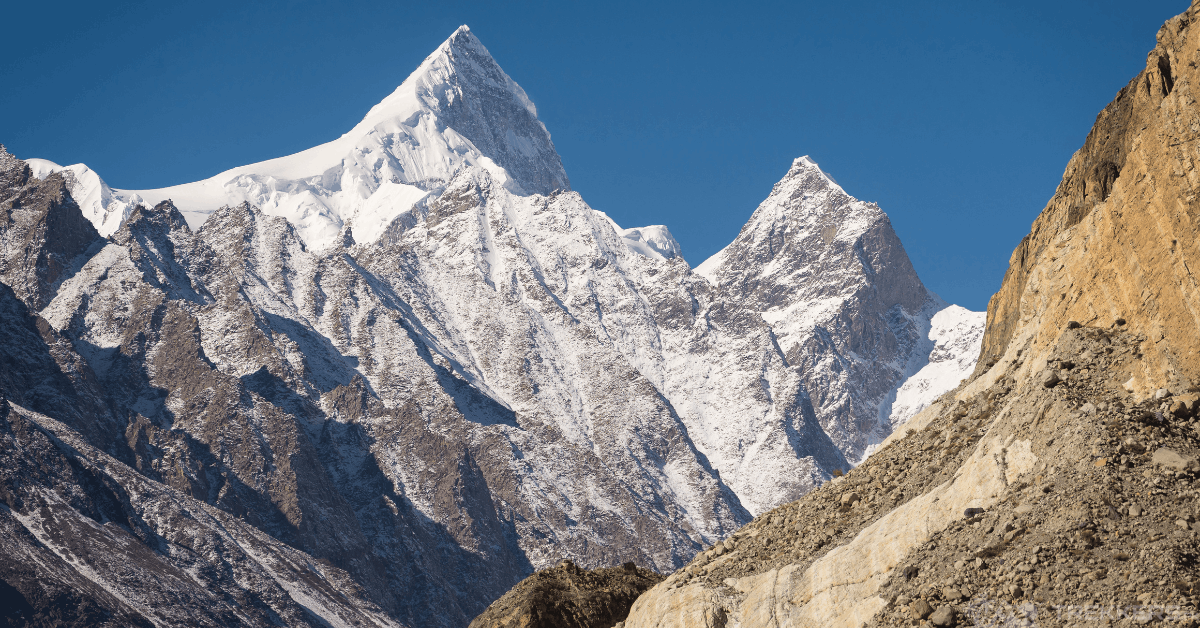
Shispare Sar: The Ultimate Guide to Hunza’s Untamed Queen
Towering above the Hunza Valley, Shispare Sar is one of the most spectacular mountains in Pakistan. Rising to 7,611 meters (24,970 feet), this magnificent peak dominates the western Karakoram skyline with steep ice walls, enormous relief, and a striking pyramid-shaped summit. It is widely regarded as one of the most aesthetic and technically challenging mountains in the Batura Muztagh region of Gilgit-Baltistan.
Unlike famous giants such as K2 or Nanga Parbat, Shispare remains relatively unknown outside elite mountaineering circles. That relative obscurity is precisely what makes it so fascinating. It offers raw wilderness, world-class climbing, breathtaking glaciers, and a sense of exploration that has largely disappeared from many heavily visited mountain destinations.
For trekkers, photographers, geographers, and climbers alike, Shispare Sar represents one of the Karakoram’s last great hidden treasures.
What Is Shispare Sar?
Shispare Sar is a major mountain peak located in the Batura Muztagh, the westernmost subrange of the Karakoram Range in northern Pakistan. The mountain stands above the Hunza Valley near Passu and Ghulkin villages and is famous for its immense vertical relief and dramatic Northeast Face. It reaches an elevation of 7,611 meters and ranks among Pakistan’s highest mountains.
Shispare Sar Quick Facts
| Attribute | Information |
|---|---|
| Elevation | 7,611 m (24,970 ft) |
| Global Rank | Approximately 38th highest mountain |
| Mountain Range | Karakoram |
| Subrange | Batura Muztagh |
| Region | Gilgit-Baltistan, Pakistan |
| District | Hunza |
| Nearby Villages | Passu, Ghulkin, Gulmit, Karimabad |
| First Ascent | 21 July 1974 |
| First Alpine-Style Northeast Face Ascent | 2017 |
| Parent Peak | Batura Sar |
| Prominence | 1,241 m |
| Main Glacier Systems | Passu Glacier, Ghulkin Glacier, Shishpar Glacier |
Location and Geography
Shispare Sar is located in Upper Hunza (Gojal), one of the most beautiful mountain regions in Pakistan. The peak rises above the western bank of the Hunza River and sits east of the massive Batura Wall. Nearby mountains include:
- Passu Sar
- Ultar Sar
- Hunza Peak
- Ladyfinger Peak (Bublimotin)
- Bojohagur Duanasir
The mountain’s location gives it extraordinary visual dominance. From certain viewpoints near Passu and Patundas, Shispare appears to rise almost vertically from the valley floor.
One of its most remarkable geographical characteristics is its relief. The summit stands approximately 5,550 meters above Karimabad over a horizontal distance of only around 13 kilometers. Few mountains on Earth display such dramatic elevation gain over such a short distance.
The Meaning Behind the Name Shispare
Several local names are associated with the mountain.
Historical and indigenous references include:
- Shispare Sar
- Shisparé Sari
- Fiak Ting
- Tegh Sar
In the local Wakhi tradition, Tegh Sar translates roughly to “Sharp Head,” a fitting description of the mountain’s distinctive summit profile. The peak has also been associated with meanings similar to “Queen of the Mountains” in local storytelling traditions.
These names reflect centuries of interaction between mountain communities and the dramatic landscapes surrounding Upper Hunza.
Why Shispare Sar Is So Unique
Many mountains are tall.
Few mountains are truly distinctive.
Shispare Sar stands apart because of several factors:
Extraordinary Vertical Relief
The mountain rises abruptly above the Hunza Valley, creating one of the most dramatic mountain silhouettes in Pakistan.
Massive Northeast Face
The Northeast Face is among the most impressive alpine walls in the Karakoram and remained unclimbed for decades despite multiple attempts.
Limited Ascents
Compared to many famous 7,000-meter peaks, Shispare has seen remarkably few successful summits.
Technical Difficulty
The mountain combines:
- Steep ice
- Mixed climbing
- Avalanche exposure
- Crevassed glacier approaches
- Severe weather
These factors make it a serious objective even for experienced climbers.

Mountaineering History and Famous Ascents
The 1974 First Ascent
Shispare Sar was first climbed in July 1974 by the Polish-German Academic Expedition led by Janusz Kurczab.
The expedition spent approximately 35 days establishing the route. During preparations for further summit attempts, climber Heinz Borchers tragically lost his life in an avalanche. The success nevertheless marked a major milestone in Karakoram mountaineering history.
The 1994 Second Ascent
Two decades later, a Japanese expedition led by Yukiteru Masui achieved the second successful ascent.
The team largely followed the original route and relied heavily on fixed ropes and expedition-style climbing methods.
The Legendary 2017 Northeast Face Ascent
The most celebrated chapter in Shispare’s climbing history came in 2017.
Japanese climbers Kazuya Hiraide and Kenro Nakajima completed the first ascent of the mountain’s formidable Northeast Face. Their route, named “Shukriya,” climbed approximately 2,700 meters of steep terrain and involved difficulties reaching WI5 and M6. The ascent was completed in pure alpine style and later received the prestigious Piolets d’Or award.
Their achievement is widely considered one of the finest high-altitude alpine ascents of the modern era.
Climbing Routes on Shispare Sar
🗺️ Track the Live Geography of Shispare Sar on Google Maps
(Note: Use Google Maps’ satellite mode to visually trace the sheer vertical drop of the Northeast Face and the complex glacier approaches mapped below.)
Southeast Ridge Route
The classic route follows:
- Passu Glacier approach
- East Ridge access
- High camp progression
- Summit ridge
Key challenges include:
- Extensive glacier travel
- Fixed rope sections
- Ice ridges
- Avalanche-prone slopes
Historically, this has been the standard expedition route.
Northeast Face Route
The Northeast Face is significantly more technical.
Characteristics include:
- Steep mixed climbing
- Thin ice
- Rock bands
- Complex route finding
- High avalanche exposure
This route remains a benchmark achievement in modern alpinism.
Trek to Shispare Base Camp
Although most people associate Shispare with climbing expeditions, the approach trek itself is a spectacular adventure.
Typical Route
Islamabad → Gilgit → Hunza → Passu → Shispare Base Camp
🗺️ Explore the Full Overland Route from Islamabad to Passu on Google Maps
Stage 1: Islamabad to Gilgit
Travel by:
- Domestic flight
- Karakoram Highway
Stage 2: Gilgit to Passu
A scenic drive through:
- Nagar Valley
- Attabad Lake
- Gulmit
- Passu
Stage 3: Passu to Base Camp
The trekking route involves:
- Moraine crossings
- Glacier travel
- Rocky terrain
- High-altitude camps
The base camp generally sits between approximately 3,300 and 4,000 meters depending on seasonal glacier conditions.
Passu Glacier vs Ghulkin Approach
Trekkers and expedition teams commonly debate two main approaches.
| Factor | Passu Glacier Route | Ghulkin Route |
|---|---|---|
| Popularity | Higher | Lower |
| Technicality | Moderate | Moderate to High |
| Glacier Travel | Significant | Significant |
| Scenic Value | Excellent | Excellent |
| Access to Patundas | Easier | Easier |
Both routes offer outstanding views of:
- Passu Cones
- Batura Wall
- Shispare
- Passu Sar
Patundas Meadow: The Best Viewpoint
If there is one place that photographers should not miss, it is Patundas Meadow.
At approximately 4,190 meters, Patundas offers panoramic views of:
- Shispare Sar
- Batura Glacier
- Passu Glacier
- Batura Wall
- Passu Sar
Sunrise and sunset conditions here create some of the most dramatic mountain photography opportunities in Pakistan.

Weather and Best Time to Visit
Best Season
The most favorable period generally runs from:
Mid-June to Late August
This window usually provides:
- Stable weather
- Longer daylight hours
- Better glacier conditions
Summer Temperatures
Base Camp:
- Day: 15–20°C
- Night: 0 to -5°C
Upper Mountain:
- Frequently below -20°C
- Can drop below -35°C during storms
Permits, Regulations, and Expedition Requirements
Foreign mountaineers planning a summit attempt should expect significant administrative requirements.
These may include:
- Expedition permits
- Royalty fees
- Liaison officer requirements
- Environmental fees
- Insurance documentation
- Visa approvals
Requirements can change regularly.
Always verify current regulations with:
- Alpine Club of Pakistan
- Ministry of Tourism
- Licensed expedition operators
The Dangerous Reality: Glacial Hazards
Many travel blogs overlook one of the most important modern issues affecting the region.
Shishpar Glacier Surges
The nearby Shishpar Glacier has experienced significant surging activity in recent years.
Potential impacts include:
- Ice-dammed lakes
- Flood risks
- Trail disruptions
- Infrastructure damage
These events can affect access routes and should be considered during expedition planning.
Wildlife, Environment, and Conservation
The broader ecosystem surrounding Shispare supports remarkable biodiversity.
Species associated with the region include:
- Snow Leopard
- Himalayan Ibex
- Golden Eagle
- Himalayan Marmot
The area is closely connected to the greater Khunjerab conservation landscape.
Visitors should follow Leave No Trace principles:
- Pack out all waste
- Minimize camp impacts
- Respect wildlife
- Avoid glacier pollution
Local Wakhi Culture and Hunza Heritage
One of the highlights of any Shispare journey is the opportunity to experience Wakhi culture.
Communities in Passu, Ghulkin, and Gulmit are known for:
- Hospitality
- High literacy rates
- Strong community traditions
- Rich mountain heritage
Before beginning a trek, many travelers spend time exploring:
- Baltit Fort
- Altit Fort
- Passu Village
- Gulmit
These cultural experiences add depth and context to any mountain expedition.
Practical Travel Guide
Can You See Shispare Without Trekking?
Yes.
On clear days, parts of the mountain are visible from sections of the Karakoram Highway near Passu and Gulmit.
Nearest Airports
- Gilgit Airport
- Skardu Airport (alternative route)
Nearest Major Town
Karimabad serves as the primary tourism hub for the region.
Mobile Connectivity
Coverage is available in major settlements but becomes unreliable during trekking and climbing phases.
Frequently Asked Questions
Where is Shispare Sar located?
Shispare Sar is located in the Batura Muztagh subrange of the Karakoram in Hunza District, Gilgit-Baltistan, Pakistan.
How high is Shispare Sar?
The mountain stands 7,611 meters (24,970 feet) above sea level.
Why is Shispare famous?
It is famous for its immense relief, dramatic Northeast Face, and award-winning alpine climbing routes.
Who first climbed Shispare?
The first ascent was completed by the Polish-German Academic Expedition in 1974.
Why is the 2017 ascent important?
Kazuya Hiraide and Kenro Nakajima completed the first ascent of the Northeast Face in alpine style, earning the Piolets d’Or award.
Is Shispare harder than Rakaposhi?
Most mountaineers consider Shispare significantly more technical and demanding due to its steep terrain and objective hazards.
Can beginners climb Shispare?
No. The mountain is suitable only for highly experienced high-altitude climbers.
What is the best time to visit?
Mid-June through late August generally provides the most stable conditions.
Can trekkers reach Shispare Base Camp?
Yes. Strong trekkers with proper preparation can reach the base camp area, though glacier travel experience is beneficial.
What is the best photography viewpoint?
Patundas Meadow offers arguably the finest panoramic perspective of Shispare and the surrounding Batura Muztagh.


This Post Has One Comment