
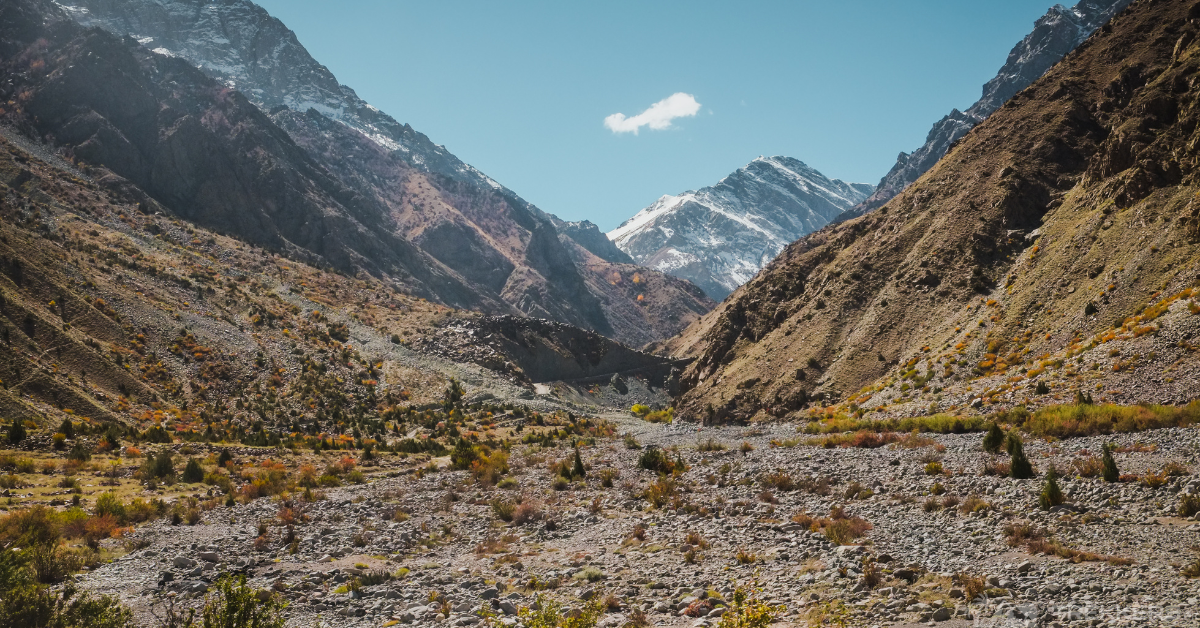
Pakistan is home to numerous spectacular peaks all over the Northern region. With five peaks over 8000 meters and one-hundred-eight peaks that are 7000 meters or higher, Pakistan has it all for mountaineers. These majestic mountains are a part of ranges including the Karakoram range, the Himalayan range, and the Hindukush range. While there are challenging mountains like K2 and Nanga Parbat, notorious for their incredibly grueling ascent, Pakistan also has mountains that are relatively easier to climb.
Easiest Peaks in Pakistan
Some of the easiest peaks that you can opt for in Pakistan are Malika Parbat, Spantik Peak (Golden Peak), Minglik SAR, Muztagh Tower, and Broad Peak, among others.
These mountains have well-established routes that can be easily accessible by all climbers. Other than just being an easy climb, these mountains are equipped with breathtaking landscapes and lush greenery, making the experience worthwhile. The serene lakes, valleys, and other snow-capped mountains also intensify the beauty.
Other than that, the unique flora and fauna are a treat to the eyes and display Pakistan’s biodiversity. The mountaineers are not concerned for their safety as much and are there for a good time.

Malika Parbat
Malika Parbat, also known as the Queen of Mountains, is located in the Himalayas, Gilgit-Baltistan, Pakistan. Though the mountain requires efficient skills and training, it is still considered one of the relatively easier peaks. Standing at a height of 5,290 meters, it is comparatively a shorter trip. However, the short journey brims with fascinating beauty and allows you to immerse yourself in the rich culture surrounding the mountain.
Spantik Peak (the Golden Peak)
Another mountain that requires less effort is Spantik Peak (the Golden Peak). Located in the extremely beautiful Nagar Valley of Gilgit Baltistan, it stands at an impressive height of 7,027 meters. The mountain is famous for its pyramid-shaped summit, accessible routes, and idyllic beauty. Its northwest ridge draws climbers towards the stunning mountain.
Minglik SAR
Next on the list is Minglik SAR, located in Hispar Muztagh of Gilgit-Baltistan at an elevation of 6,050 meters. The steep routes and technical rock formations are quite complex, but the well-established routes make the ascent easier. The beauty of the astonishing mountain is what makes it desirable and attracts climbers to the Minglik SAR.

Muztagh Tower
Muztagh Tower, also situated in Gilgit-Baltistan, is one of the easiest mountains to climb in Pakistan. This majestic mountain stands at 7,273 meters. The name Muztagh Tower translates to “Ice tower” representing the ice formation of the mountain. The rich culture and legacy of Muztagh Tower make it popular among the mountaineering community.
Broad Peak
Last but certainly not least is Broad Peak. Standing at an elevation of 8,051 meters, Broad Peak is one of the eight-thousanders and the 12th highest mountain in the world. Situated in Gilgit-Baltistan, the Broad Peak is part of the Karakoram range. Surrounded by various mountains and glaciers in Concordia, the mountain’s beauty is irresistible.
Conclusion
These mountains are an economic and tourism focal point for Pakistan. Their ethereal beauty attracts climbers and tourists from all around the world. There are local guides and various packages for tours to all of these Mountains. Even a person who knows the basics of ice climbing can attempt to climb these mountains.
Pakistan has a diverse variety of mountains, from some of the hardest mountains to more accessible mountains. It is home to mountains that everyone can access. The Broad Peak, Spantik, Minglik SAR, Muztagh Tower, and Malika Parbat are mountains that can be climbed with less struggle, and climbers can have a pleasurable time reveling in the beauty surrounding them.


