
Discovering Rakaposhi: The Iconic Peak
Some places don’t just exist on maps; they stay with you long after you’ve left them. Rakaposhi left that mark on me. In the heart of Northern Pakistan, where you feel an immense amount of gratitude to God for merely existing. Where valleys are carved deep into stone and clouds drift low enough to touch, stands a mountain that made my beliefs about the divine being stronger than ever.
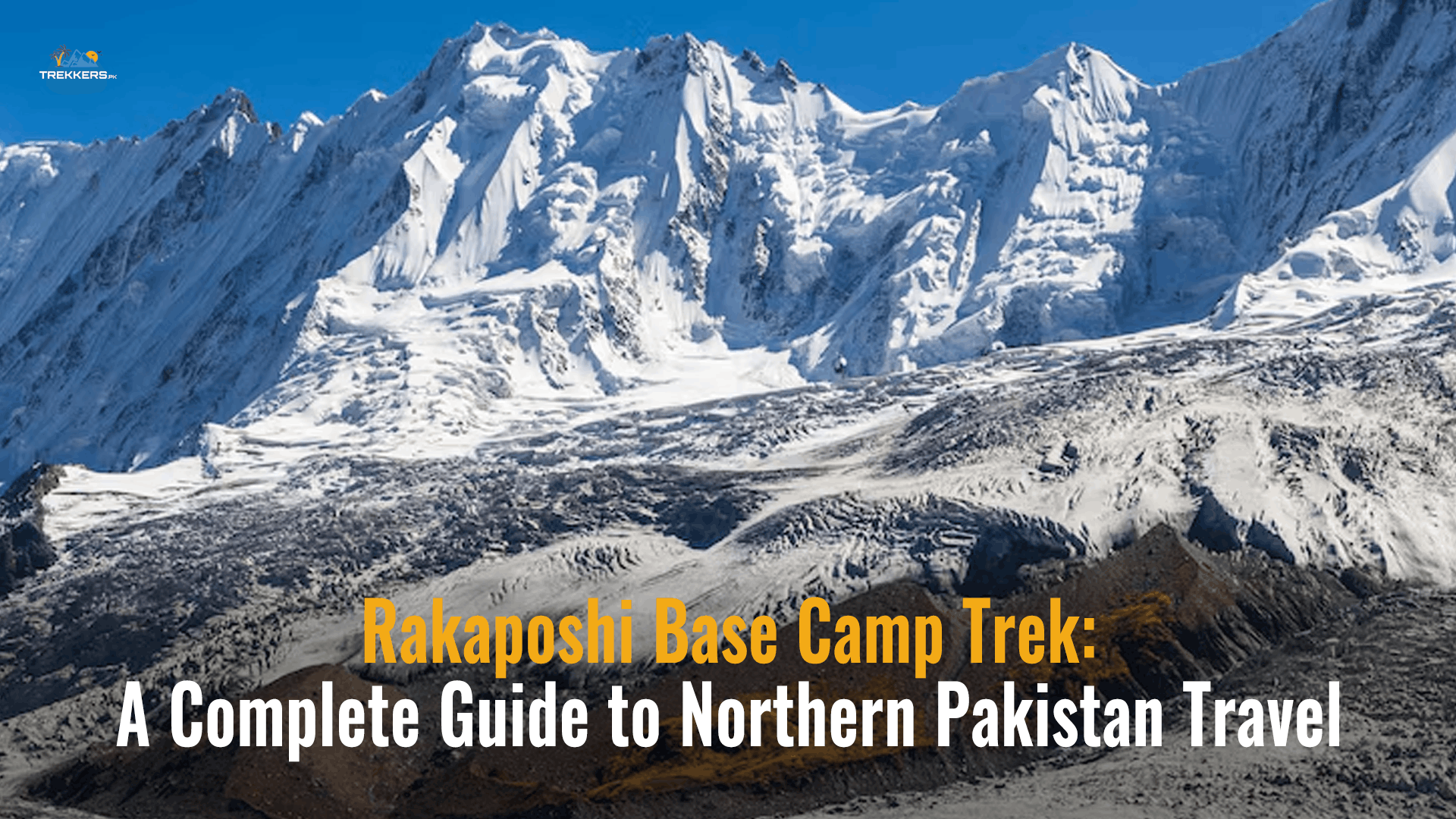
Rakaposhi rises in all its glory between the Nagar and Bagrote valleys within the vast Karakoram Range, its vast white face stretching across the horizon, making the view irresistible. In this region of Pakistan, where mountains define the landscape and every valley feels like a world of its own, experiences like this become more than just travel; they become memories.
Locally known as Dumani, the “Mother of Mist,” it often disappears and reappears within the shifting clouds, as if choosing the people who get to see the insanely unreal view.
At 7,788 meters, Rakaposhi is not just one of the highest peaks in the world, but it’s one of the most stunning, visually striking peaks I’ve gotten the opportunity to witness. Its sheer vertical rise creates a wall of snow and rock that dominates everything around it. So much so that your eyes can only marvel at the beauty that is in front of you without wanting to wander elsewhere. Rakaposhi’s trail is unforgettable not only because of its scale, but also the feeling it leaves behind: small, humbled, and strangely inspired.
| Category | Details |
|---|---|
| Destination Name | Rakaposhi Base Camp Trek |
| Location | Minapin Village, Nagar Valley, Gilgit-Baltistan, Pakistan |
| Mountain Range | Karakoram Range |
| Peak Height | 7,788 meters (25,551 ft) |
| Base Camp Height | 3,500 – 3,600 meters |
| Trek Duration | 2 – 3 days (round trip) |
| Trek Difficulty | Moderate |
| Best Time to Visit | May to October |
| Starting Point | Minapin Village |
| Major Stops | Hapakun Meadows, Rakaposhi Viewpoint, Glacier sections |
| Access Route | Islamabad → Karakoram Highway → Gilgit → Nagar → Minapin |
| Transport Options | Bus, Hiace, Private Car, Jeep (Minapin onward) |
| Trek Highlights | Snow-capped peaks, alpine meadows, glacier views, Karakoram scenery |
| Weather Conditions | Mild in summer, cold at night, unpredictable in shoulder seasons |
| Accommodation | Guesthouses in Minapin, camping at Hapakun/Base Camp |
| Fitness Level Required | Basic to moderate fitness recommended |
| Altitude Risk | Mild altitude effects possible (headache, fatigue) |
| Permits Required | No special permit required for locals/foreign tourists (subject to updates) |
| What to Carry | Trekking shoes, warm layers, water, sunscreen, first aid kit |
| Safety Tips | Acclimatize properly, follow guide if possible, monitor weather |
The Location, Best Time and Difficulty at the Rakaposhi Base Camp
What makes it especially remarkable, however, is how easily it can be seen from the Karakoram Highway, offering a rare combination of accessibility and scale. The best time to visit is between May and October, when weather conditions are more predictable and trekking routes are open. While the mountain can be admired from afar, the journey to its base camp is moderately challenging, requiring stamina, preparation, and a willingness to move beyond comfort.
About Rakaposhi: The Shining Wall of the Karakoram Mountains
Its broad, symmetrical structure gives it a distinct identity, one that feels less like a random formation and more like something carefully shaped over time, like God took his sweet time to create it. The name “Mother of Mist” starts making more sense when sunlight hits the mountain’s surface, shifting in tone throughout the day, from soft gold in the morning to a sharper, almost reflective brightness by afternoon. By evening, it begins to fade into the surrounding landscape, leaving behind only a silhouette that feels quieter, almost reflective.
Despite being successfully climbed decades ago, Rakaposhi has managed to avoid becoming overly commercialized. It still feels quiet, almost untouched, allowing the experience of being there to feel more personal. It creates a sense of connection with the landscape that is difficult to describe until you experience it yourself. This balance between accessibility and rawness continues to draw people toward it.
What Sets Rakaposhi Apart from Other Peaks
For me personally, it has not just been about how a mountain looks or how complicated the journey is, but how it makes me feel when I encounter it. How overcome with joy I would be when I set foot on the peak and would take in the overwhelming view. With Rakaposhi, I felt all these emotions with an immense amount of intensity. There was no effort in noticing it; the Mother of Mist naturally became the centre of my attention.
Rakaposhi’s trek offers something rare. It doesn’t demand an extreme expedition to be appreciated, yet still invites you closer, deeper, further in. It allows you to experience both distance and proximity at the same time, which is what makes it stand out in any mountain adventure in Pakistan.
A Journey Beyond The Destination
My own journey toward the Rakaposhi Camp did not begin at the mountain; it began with a quiet realization that this trip meant something more. Traveling with my friends who were all about to step into different phases of life gave everything a sense of urgency, as if we were trying to hold on to a moment we knew wouldn’t come back in the same way again.
From Islamabad to Minapin
Starting from Islamabad, the first part of the trip felt almost lighthearted. We moved through familiar spaces, busy roads, crowded markets, and quick stops that felt more like distractions than destinations. But as the road stretched further north towards Gilgit, and the mountains slowly began to appear, something shifted. Conversations grew quieter, replaced by long silences, with everyone lost in their own thoughts, watching the unreal landscape outside the window change.
Trekking Through Minapin to Hapakun
By the time we reached Minapin, the energy had changed completely. It no longer felt like a casual trip. It felt like we had arrived somewhere that demanded our attention. Like, this trip is the last time I will ever get to feel this high with my friends. After a short rest, we began our trek, not fully aware of how much it would take from us, or how much it would give back.
The first stretch was almost deceiving. Walking through green fields with the sound of the Minapin River in the distance felt manageable, even enjoyable. We laughed, took unnecessary breaks, filmed baseless videos, and convinced ourselves the hardest part wouldn’t be so bad. But gradually, the path began to climb, and the effort became undeniable.
The forest trail was quieter, more demanding. Each step required more focus, more energy, and at some point, the conversation faded entirely.
Reaching Hapakun felt less like a milestone and more like a relief. Sitting there, surrounded by open meadows and distant peaks, we had a kind of shared understanding. No one needed to say how tired they were because we all had our eyes on the prize. We all wanted to be at the Rakaposhi Base Camp for the majority of our days.
Reaching Rakaposhi Base Camp
As magical as the view was, our journey did not end here. In fact, it had just started. The next stretch toward base camp felt different, more intense, more real. The trees began to thin, the air grew colder, and the landscape opened up in a way that made everything feel exposed. I still remember the exact moment the forests cleared. It wasn’t loud or dramatic. We simply walked out, and there it was, Rakaposhi, fully visible, closer than before, and impossibly still.
No one spoke for a while.
That silence stayed with me longer than any conversation we had on the trip.
That night, under a sky scattered with stars, everything felt distant from the life we had left behind. It felt as though we were in a trance. There were no notifications, no noise, just the quiet presence of the mountains and the realization that some moments don’t need to be shared to be meaningful.
There was a moment, quiet and almost unnoticeable at first, when everything just slowed down. Sitting there looking out without any devices, or saying anything, it felt like the mountain wasn’t something to capture anymore. It felt almost sacred, that in order to witness this mystical view you need to come here and feel it for yourself.
Challenges of the Rakaposhi Base Camp Trek
The beauty of the journey often makes you forget how demanding it truly is. The trek to Rakaposhi Base Camp isn’t just a scenic walk, it’s a test of endurance, patience and at times, your own expectations.
There were moments when the climb felt heavier than anticipated. When each step required more effort than the last. What initially seemed manageable slowly turned into something that pushed both physical and mental limits. The steep inclines, uneven paths, and long hours of walking created a rhythm that was difficult to maintain without stopping.
On top of everything, altitude added another layer of challenge. It wasn’t immediate, but it made itself known gradually, through shorter breaths, slower movements, and the quiet realisation that your body needed time to adjust. There were points where continuing forward felt like a choice rather than an instinct.
Weather too, played its part. Clear skies could shift unexpectedly, and the temperature dropped faster than any of us could anticipate. As we moved further the weather kept getting crueler. It was a reminder that no matter how prepared you feel, the mountains operate on their terms.
And yet, strangely I would not have my trip any other way. Those challenges along the way became a part of what made the experience meaningful. It wasn’t just about reaching the base camp, it was also about everything it took to get there. The exhaustion, the pauses, the frustrated laughs, the moments of doubt, they all became woven into the memory of the journey itself.
Looking back, it wasn’t the easiest trip. But it was the one that I’ll always look back at.
Rakaposhi was not just a mountain I got the privilege to witness, it was a story that stayed with me forever.
Rakaposhi Base Camp Trek Travel Tips for a Safe Journey
- Best Time to Visit: May to October for stable weather
- What to Carry: Warm layers, trekking shoes, sunscreen, water, and basic first aid
- Safety Tips:
- Take time to adjust to the altitude
- Consider going with a guide for the trek
- Stay aware of weather changes
- Pace yourself and don’t rush the experience
How difficult is the Rakaposhi Base Camp Trek?
Rakaposhi Base Camp Trek is considered a moderate-level trek. It requires basic fitness, stamina, and the ability to walk for several hours on uphill terrain. Beginners can complete it with proper pacing.
How long does it take to reach Rakaposhi Base Camp?
The trek usually takes 2 to 3 days round trip, depending on your pace and stops at Hapakun and other viewpoints.
What is the best time to visit Rakaposhi Base Camp?
The best time is from May to October, when weather is stable, trails are open, and visibility of Rakaposhi peak is clear.
Do I need a guide for Rakaposhi Base Camp Trek?
A guide is not mandatory but is highly recommended, especially for first-time trekkers, as it helps with navigation, safety, and local knowledge.
How do I reach Rakaposhi Base Camp from Islamabad?
Travel from Islamabad to Gilgit via Karakoram Highway, then head to Minapin Village in Nagar Valley, which is the starting point of the trek.
Is altitude sickness a risk on this trek?
Yes, mild altitude effects like headache or fatigue can occur as the base camp is above 3,500 meters. Proper acclimatization and hydration help reduce risks.
What should I pack for Rakaposhi Base Camp Trek?
You should carry:
– Warm layered clothing
– Trekking shoes
– Water bottle
– Sunscreen & sunglasses
– First aid kit
Is Rakaposhi Base Camp Trek suitable for beginners?
Yes, it is suitable for beginners with basic fitness, but slow pacing and rest stops are important.
What are the main stops during the trek?
Main stops include Minapin Village, Hapakun Meadows, and Rakaposhi Viewpoints before reaching base camp.
Is camping available at Rakaposhi Base Camp?
Yes, camping is possible at Hapakun and Base Camp areas, but most trekkers also stay in Minapin guesthouses.


This Post Has 2 Comments