
While aimlessly skimming the pages of my dad’s journal, I came across a list of mountains my dad had never climbed. Most of them had names I couldn’t even pronounce yet know the location of but I knew I was going to be climbing these mountains as soon as I stumbled upon this list. Out of all the unrecognizable names, Diran stood out to me. Just the name alone evoked a sense of adventure and awe within me, making me want to catch a flight as soon as I read the name.
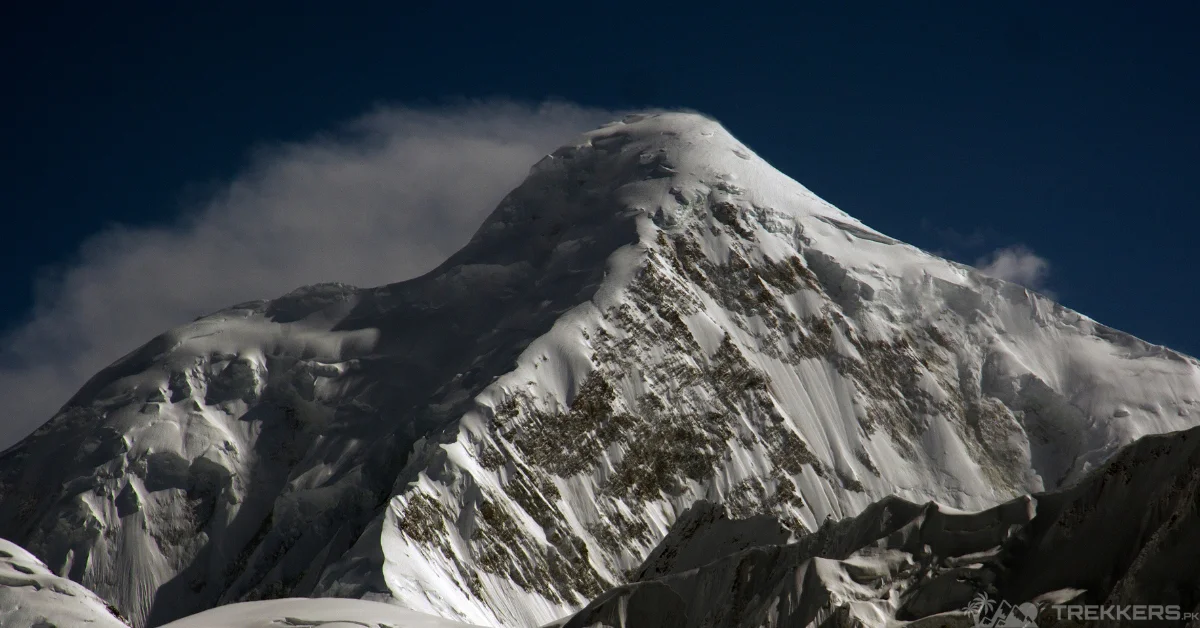
Located in the magical Nagar Valley in the Karakoram range, Diran is a 7,226-meter mountain shaped like a pyramid lying to the east of Rakaposhi. The mountain was first climbed by three Austrian climbers, Rainer Goeschl, Rudolph Pischinger, and Hanns Schell in 1968.
The immensely breathtaking Diran mountain is a quite difficult mountain to climb. It is notorious for its avalanche prone snow slopes and has a pretty high death toll too. While the insurmountable death rate of any mountain usually scares climbers away, my team and I were ready to conquer the trail of Diran.
Preparing For The Thrilling Escapade to Diran Peak:
While awaiting our climbing permit and visas, we diligently prepared for the expedition by packing our gear and refining our training regimen. Knowing the challenges that lay ahead, we focused on endurance, strength, and resilience to ensure peak physical and mental performance for the demanding ascent.
My pre-climbing rituals encompassed team bonding exercises, high-intensity cardio, strength training, and mental visualization techniques. Developing a structured and holistic workout routine significantly enhanced my mental fortitude, climbing proficiency, and overall preparedness. This disciplined approach instilled the confidence I had previously lacked, reinforcing my determination to conquer Diran Peak’s rugged terrain and unforgiving altitude.
Packing was not much of a hustle as I have helped my dad pack for all his trips and his team helped me a great deal during my trip to the Hindukush Range.
Around the time of me packing my bags and preparing for the trip, my team and I had gotten our visa and also our permit. Securing our visa and permit made our trip to Diran feel more tangible and imminent.
Driving Through The Divine Scenery to Diran:
Flying to Islamabad to Commence Our Unforgettable Journey:
After a month of packing and strenuously working out, we were finally heading to Islamabad, the capital of Pakistan. Landing in Islamabad and spending a day there is always a pleasurable experience. I never get tired of witnessing the unreal beauty of the Faisal Mosque and then visiting the nostalgic Raja Bazaar.
Islamabad to Chilas:
From Islamabad, one of my team members had already hired a jeep for us and we made our way to Chilas. From Islamabad we took a 6 to 7-hour drive to the breathtaking Naran. Long drives have always been a weakness of mine, there is something so tiring about sitting in a car for prolonged hours but Pakistan’s scenic beauty never fails to amaze me. Making the drive one of the best experiences I have ever had. From Naran we drove for approximately 4 hours to finally reach Chilas via Babusar Pass (4,163 m).
Chilas to Minapin:
Our night stay in Chilas was one of the best experiences I have ever had. During our stay in Chilas, we created a bonfire and I shared my dad’s stories with everyone. Talking about him with all the teammates healed something within me and from then on, it felt like I was traveling with him. The next morning we were back in the jeep, making our way to Minapin. Drive to Minapin was long yet breathtaking too. We also stopped at the junction point of Pakistan’s bog three, Karakoram, Himalayas and Hindukush, where we took some photographs to capture the moment.
- Trekking From Minapin to Hapakun:
We made our way to the Minapin Village, where we bid farewell to our jeep driver. The Minapin Village was truly a sight to behold, with its vibrant colors and rich cultural heritage shining through. It was a beautiful representation of their traditions and way of life. After resting there for a while, we made our way to to the Minapin River, also getting a panoramic view of the Minapin Glacier and eventually the of the entire Rakaposhi-Diran crest line. We took a moment there to bask in the overwhelming beauty around us then proceeded to move further to Hapakun.
From Hapakun to Tagaphari to Diran Peak Base Camp:
Trekking from Hapakun led us to the Rakaposhi base camp, Tagaphari. After taking a break for lunch we continued our trek to Diran Peak Base camp. We ascended through the forest with an excellent view of Diran as we moved up the Minapin Glacier.
Climbing Days At Diran Peak:

Our ascent up Diran Peak started at the base camp, nestled at an altitude of 4,800 meters. The colorful tents against the mountainous backdrop set the stage for a journey intertwined with memories of my dad and the team that had become a second family.
Camp I:
The climb kicked off with rocky paths and icy stretches, taking us through Camp I at around 5,400 meters. Here, the air was noticeably thinner, and the team’s camaraderie became crucial for motivation. Camp I was not just a pitstop; it was a reflection of shared stories and the legacy we were upholding.
Camp II:
Moving higher, we reached Camp II at approximately 6,200 meters. The landscape transformed into a stunning vista of snow-clad peaks, testing our resilience both physically and emotionally. The shared laughter around the campfire and the exchange of tales about my dad’s exploits became the fuel that helped us climb the breathtaking mountain.
Camp III:
Camp III, situated at an elevation of around 6,800 meters, marked a pivotal point in the climb. The challenges intensified, and the team’s support became even more crucial. The air grew thinner, but the shared determination of the group propelled us forward.
Camp IV:
Camp IV being our final stop was full of peril. It was our last stop before the final push to the summit at an elevation of 7,200 meters. The temperature was biting, but the camaraderie and shared purpose among the team created a sense of unity and resolve.
Reaching the Summit of Diran Peak:
Finally, the summit at 7,266 meters was an emotional apex. The view from the top was both breathtaking and humbling. Standing there, I felt a profound connection – not just to the towering mountain beneath me but also to my dad’s enduring spirit. Diran Peak became a symbol of shared triumph, a testament to the bonds forged in the thin air of its challenging ascent.
Conclusion:
Being able to climb the Diran Peak was not only a physical challenge, but a deeply personal journey for me too. Knowing that my father would’ve been over the moon if he were standing where I was, evoked a sense of happiness and sadness within me.
The beauty of the snow-capped peaks and the rich culture of the surrounding region added another layer of awe to the experience. It was a testament to the power of nature and the resilience of the human spirit. The memories and lessons I gained from that climb will forever hold a special place in my heart.
Here are the links to some of my adventures in the breathtaking Hindukush Range:
All About Istor-o-Nal — the Third Highest Mountain of Hindukush


