
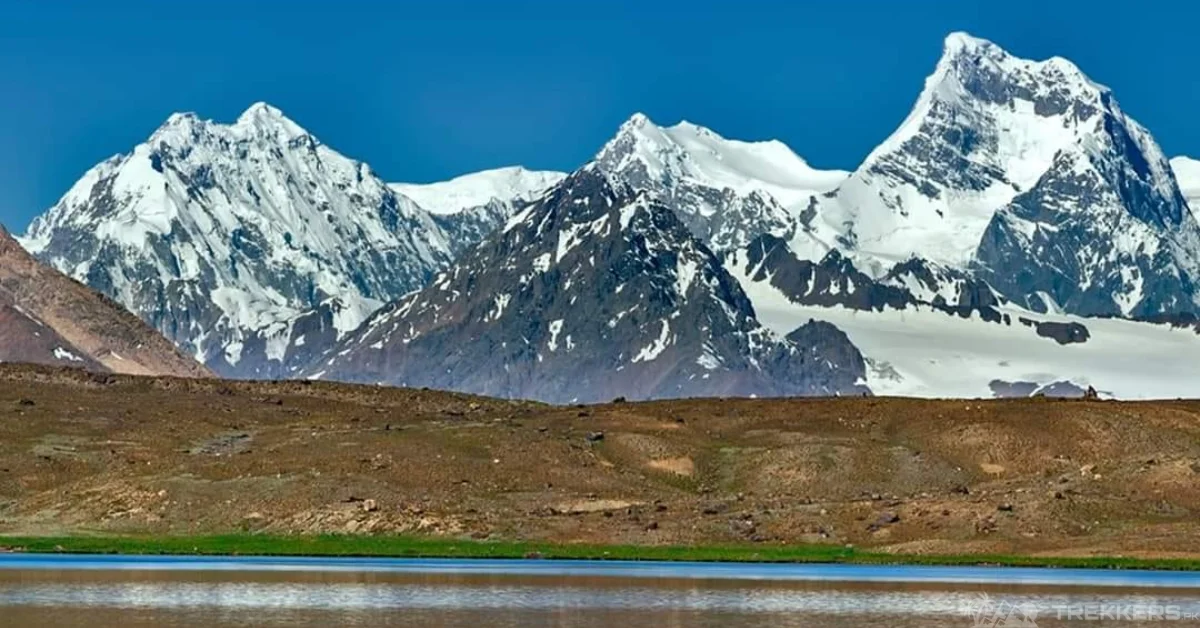
Standing tall with grandeur, expanded from Central Asian countries to South Asian countries, The Pamir Mountains appear to be the roof of the world. They are mainly located in the core of Tajikistan, standing against each other for elbow room along the vague borders of Afghanistan, China, India, and Pakistan.
This junction is known as the Pamir Knot. Geologists explained that the highest extension of the great mountain ranges radiates outwards from this zone. This convergence point holds the prominent rocky giants of the world’s highest mountain ranges: the Tian Shan, the Karakoram, the Hindu Kush, and the Himalayas.
Location of the Pamir Mountains in Pakistan:
Pakistan’s most promising hotspot for biodiversity is the Pamir Range stretching along the borders of Afghanistan and Tajikistan (Wakhan Corridor). The Pamir area of Pakistan is in a remote location distanced from the countryside area, the Shimshal Valley of Gilgit-Baltistan.
The last crowded village to set off for Pamir is Shimshal, situated 3,000 meters above sea level in the Gojal tehsil of Hunza district. Comprising around 250 households nestled in the Pamir mountains of the Karakoram range among the scenic yet challenging terrain. It is home to the Wakhi ethnic community settled in the countryside of Pakistan.
Cultural Significance of the Pamir Region:
In the heart of Shimshal, a unique tradition thrives: women taking the lead as shepherdesses. These old-age women (mostly septuagenarian to octogenarian) take care of their cows, goats, sheep, and yaks. They work side by side with their males to share the responsibilities of supporting their families and contributing to their household income.
As spring graces the village, Shimshal adapts the transhumance activity of the herds – a seasonal movement of livestock to the grazing area called “Kuch,” which means traveling in a caravan. A man called “shpun” in Wakhi, designated to watch over the yaks in the high pastures, accompanies the aged shepherdesses.
They settled an ephemeral hamlet at this altitude of 4,600m in the ground of Pamir for months. Their purpose was to ensure their animals graze abundantly and become a source of income through valuable products such as milk, rogan (butter), qurut (cheese), gosht (meat), and pulos (rugs) from these animals.

The Journey Towards Pamir:
On my northern trip to Pakistan, I marvelled at the Karakoram giant K2, and while we were retracing our steps from Concordia, our tour guide unveiled an unseen vista of the Pamir Knot. This point reveals the subtle convergence of the world’s three highest mountain ranges, the Karakoram, the Himalayas, and the Hindukush, imperceptibly standing with each other and lying in Pakistan.
Eager to unravel Pamir’s secrets, I hired a jeep to transport me to the final bustling village on the outskirts of Pamir. I immersed myself in the tales of the locals and discovered their unparalleled hospitality. Traditionally, the people of Shimshal depend on herding and farming. The community’s resilience captivated me, so I joined them on their journey.
As the sun dawned, the old ladies prepared their baggage with the essential commodities and food to begin the route. Gearing up themselves with the bags on their backs while journeying to the arduous treks. Despite their age, their spirit and sense of responsibility were unwavering.
Taking the livestock across Shimshal Pass, reaching their destination on treacherous mountain trekking trails from Shujerav to Shuiwwerth for 3 to 4 hours. Assembling their herds through the route is a significant responsibility they are carrying and fulfilling skillfully.
Shimshal lacks abundant grazing lands, so women with their herds travel for a three-day trek to the Pamir ground. Passing through the narrow strips of the mountains, facing the rough weather and with the risk of life and death, women take their livestock to their destination.

Post-2017, with the construction of the Shimshal bridge, the journey became a three- to seven-day trek, depending upon the weather. Crossing over a refreshing lake, this sturdy bridge added a delightful touch to the Pamir trail.
Reaching the Pamir Mountains:
An overwhelming sense of exhilaration washed over me as I reached the verdant expanse of the Pamir ground. Twirling on the ground, dancing with joy, and letting the winds carry my elation. However, my jubilation was suddenly halted by a stern shout. The man accompanying us cautioned me about the curve, emphasizing that a misstep could lead to unintentional boundary crossing into another country.
Curious that I questioned the consequences if I stepped onto the wrong side. To that, he replied that it can be problematic. This puts the people on either side in inconvenience and potential issues. I asked him if the Wakhi ethnic group is settled in the countryside of three countries, Pakistan, Tajikistan, and Afghanistan, and if they have relatives across borders. He nodded and explained that the boundary does not cause that many issues for them and allows movements for important meet-ups and gatherings.

Basking in the sun in the Pamir ground, I relished the days spent in unexplored destinations. Moreover, the joyful countenance of the old shepherdesses caring for their cattle is delightful. As part of the tradition, they sing songs when their herd grazes, signaling the harmony of life. The women were engrossed in shearing sheep and milking the cows. They were also busy preparing dairy products for their trade purposes and income support.
The Pamir ground is a perfect place for sightseeing. Lying there soaking in the sunlight offers moments of solitude. Planning to depart early, I inquired the man about transportation back to the village after my brief retreat, which he denied, and I, along with my porter, journeyed back to the Shimshal Valley.
Tourism and Accessibility for Explorers:
Taking our footsteps outside the region, my heart becomes heavy. The journey towards the region burdens the body, but the departure from the place burdens the soul. The Pamir Mountains in Pakistan are known for their rugged and remote landscapes, attracting adventure enthusiasts and trekkers.
The region is a captivating yet challenging destination for tourism. It offers a unique and pristine environment that appeals to adventure seekers and nature enthusiasts. The accessibility to the Pamir Mountains in Pakistan, however, comes with its set of challenges.
The region’s remote location and challenging terrain make reaching the Pamir Mountains an adventure. Travelers often embark on long, winding journeys, navigating through mountainous roads and valleys to reach this secluded haven. The lack of well-developed infrastructure adds an element of exclusivity to the Pamir Mountains.
Pamir Knot in Pakistan appeals to those with a penchant for exploration and a spirit of adventure. While the challenging accessibility may deter casual tourists, it becomes a magnet for intrepid travelers drawn to the untamed beauty. Tourists witness the unique cultural experiences of the Pamir region here.
For those willing to embark on the journey, the rewards are immense. The Pamir Mountains showcase breathtaking landscapes, diverse landscapes, and the rich cultural tapestry of the local communities.
As tourism in this region continues to develop, efforts to improve accessibility and infrastructure are underway. The government should aim to balance preserving the pristine environment. Simultaneously, efforts should be made to make this hidden gem more accessible to a broader audience.
Conclusion:
The Pamir region invites adventurers to summon on its call and embrace the unique charm that unfolds within Pakistan’s borders. From this vantage point, where the roots of the highest mountain range intertwine, witnessing the Pamir knot becomes an enchanting experience.
This enclave is a perfect place for those who yearn to escape and explore. Discover the allure of the Pamir mountains and take full advantage of your travel days in Pakistan.
Seeking more adrenaline-fueled stories? Navigate to the launch point of my adventure, Trekking to Mighty K2 Base Camp: A Lifetime Venture!


