
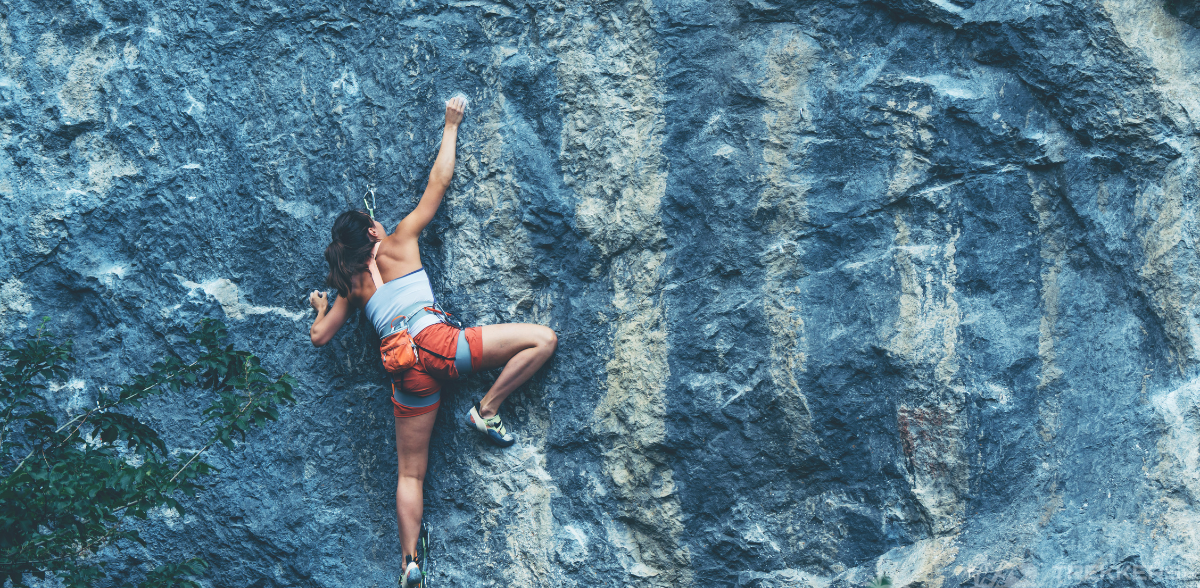
Why do people climb mountains? This question often lingers in my mind. Is there a treasure hidden in mountain climbing that they had to reveal? Or do they feel left out amidst living in the bustling crowds, so they seek refuge there?
The reason may be to checkmark personal wish lists, or maybe it’s a passion of many. Regardless of this, it is important to understand the diverse motivations that drive adventurers to tread the path of mountain exploration.
Here are 10 powerful reasons enlisted that enrich the life of a mountaineer and motivate them for mountain climbing.
1. Escape from Routine
Mountains are a perfect spot to get a break from a monotonous life and a noisy world. It is pure bliss sitting over the top with winds caressing your face, watching over the sky, birds echoing in your ears, and feeling serenity spread everywhere. Because mountainous regions have limited or no cell phone reception, they are ideal places to disconnect from the digital world. This break from constant connectivity allows individuals to unwind and be present in the moment.
2. Mental Resilience:
It may feel daunting from down, but once you reach the top, it all feels surreal, a view that soothes your soul and gives you mental peace. Facing adversity, fears, woes, and pain and never giving up to reach the top, realize your inner potential. A person becomes mentally stronger to recognize the feeling of overcoming fears. Climbing mountains contributes to unveiling your personal growth and self-discovery.
3. Physical Fitness:
Climbing mountains is a physical fitness feat. Its slope, rocks, and scaling against gravity structures require all your soul and heart to put into its ascent. Thus, climbers always maintain physical fitness to endure the harsh conditions of the mountain. Also, climbing contributes much to a person’s health. While aspiring to climb mountains, it becomes their priority to eat healthy and nutritional foods to keep the body filled with the right fuel.

4. Teamwork & Camaraderie:
A journey becomes memorable with the people we are surrounded by. The hardships of the mountains and the passion they share unite people sans border. Expedition team members hailing from different parts of the world join with the same goal of reaching the top. The trust they built to rely upon each other for safety and support and the lows and highs they faced in scaling the mountain will also be remembered forever.
5. Make a Distinction in Mountain Climbing
A fondness for mountain climbing can lead to attempting summits of the world’s highest mountains. Transitioning from a seasonal climber to a professional climber, grabbing feathers in your cap. But only if you continue practicing climbing can you be one of the title holders of touching elevated grounds of the earth.
6. Connection with Nature
Mountains are a perfect place to enjoy time in solace. Most people solo climb mountains to inhale the positivity of nature. Mountains are the humongous testament of nature; the weather there, the elevation, and the raw beauty of earth attract people towards it. Once you achieve the summit, after the descent, your heart calls to make the journey again towards it.
7. Cultural & Spiritual Significance
Mountains bear huge cultural significance for the indigenous people of the region. The community often resides under the shelter of mountains in tribes and ethnic groups. Mountains play a central role in local folklore, customs, and traditions that are integral to their way of life. Many religions consider mountains as spiritual heritage, believing that they house numerous deities and hold revered religious figures, creating a connection with the divine.
8. Descent Changes You As A Person A Lot:
During an arduous trek, unexpected events show up. Mishaps and miseries are a part of every journey, and that is what makes it wholesome. Landslides, mud falls, avalanches, rock breaks, and ice falls are part and parcel of every mountain route. But when your footprints touch the top, every bitterness of the pathway fades away.
You embarked on the journey with the baggage of necessities, but as you finish, that baggage is empty. However, your heart is full of recollections. Furthermore, this adventure has instilled a transformative shift in your character. Qualities like gratitude, perseverance, and courage that were merely your dormant potential find a way to unearth and shine in your outlook. The descent is nursed with a rollercoaster of emotions throughout the journey you pulled off and encages memories in your heart for a lifetime.
Before heading up to your next trip, know your preference; click here to learn about Group Travel or Solo Travel: What’s Your Pick for Next Vacation?


